If you've ever heard a scraping or rubbing sound coming from your disc brakes, you're not alone. Brake rub is one of the most common issues cyclists experience, and in many cases it's easy to fix once you know what to look for.
Whether you ride a road bike, mountain bike, gravel bike, or e-bike, understanding the causes of brake rub can save you time, frustration, and unnecessary trips to the bike shop. Try a entry level class to wet your feet witht the four hour Beginner Class.
1. The Brake Caliper Is Slightly Misaligned
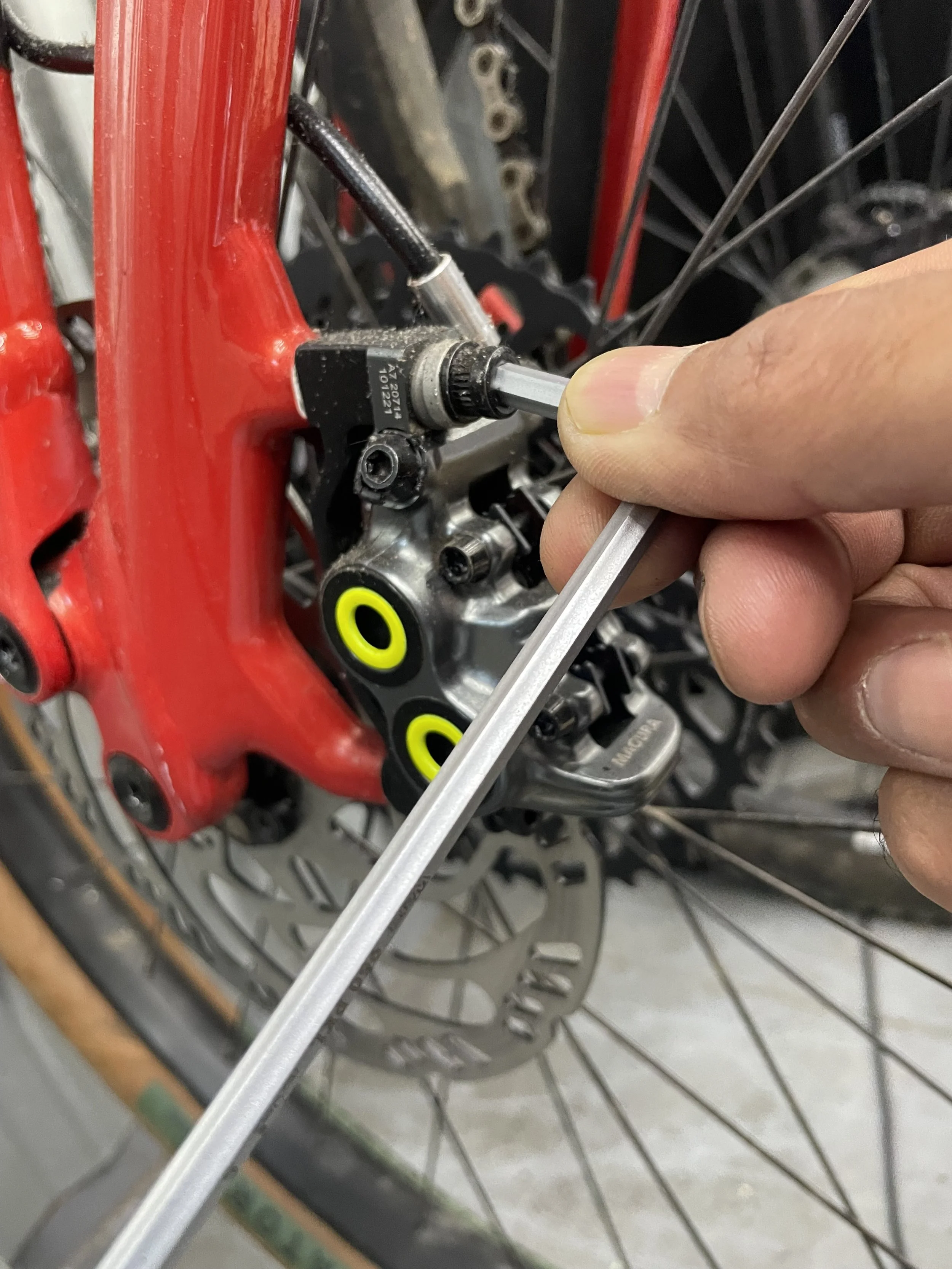
The most common cause of brake rub is a brake caliper that isn't perfectly centered over the rotor.
Even being off by a fraction of a millimeter can cause the rotor to lightly touch one brake pad.
What to do:
Loosen the two caliper mounting bolts slightly, squeeze and hold the brake lever, then tighten the bolts evenly before releasing the brake lever. Spin the wheel and check for rubbing. Fine adjustments by eye may still be necessary for the best alignment.
2. The Rotor Is Slightly Bent
Disc brake rotors don't have to be badly damaged to make noise. A small bend from transporting your bike, leaning it against something, or an accidental impact can create an annoying rub.
What to do:
Spin the wheel and watch the rotor pass through the brake caliper. If it moves side to side, the rotor may need careful straightening with a rotor truing tool.
3. The Wheel Isn't Fully Seated
If the wheel isn't completely seated in the dropouts or axle mounts, the rotor may no longer line up correctly with the brake caliper.
What to do:
Remove and reinstall the wheel, making sure the thru-axle or quick release is properly tightened.
4. The Pistons Need Attention
Over time, brake pistons can become dirty or move unevenly. One piston may extend farther than the other, causing the rotor to rub.
What to do:
The pistons may need to be cleaned and exercised so they move freely. This should be done carefully to avoid contaminating the brake pads or rotor.
5. A Rotor May Need Replacement
Rotors wear over time. If they become too thin or have excessive damage, replacing them is the safest option.
Most manufacturers specify a minimum rotor thickness. Measuring the rotor with a caliper can tell you if it has reached its wear limit.
6. New Brake Pads Need to Be Bedded In
Fresh brake pads or a new rotor sometimes make light noises until they've been properly bedded in.
Proper bedding transfers an even layer of pad material to the rotor, improving braking performance and reducing unwanted noise.
7. Dirt or Debris Is Trapped
A small pebble, mud, or trail debris can become lodged between the brake pad and rotor.
What to do:
Inspect both sides of the caliper and remove any debris before continuing your ride.
8. The Brake Was Never Properly Adjusted
Sometimes a brake simply wasn't adjusted correctly during installation or after service.
A complete inspection includes checking rotor condition, pad wear, caliper alignment, wheel installation, and overall brake function.
Don't Ignore Brake Rub
Light brake rub may seem like a minor annoyance, but it can reduce efficiency, create unnecessary wear, and sometimes point to a larger issue.
Learning how to diagnose the cause instead of simply guessing can make bicycle maintenance much less frustrating.
Learn Bicycle Repair at Bike Teacher
At Bike Teacher in San Jose, California, students learn bicycle repair through hands-on instruction in a real workshop. Instead of just watching videos, you'll work on actual bicycles and learn how to diagnose problems, make accurate adjustments, and understand why each repair works.
Whether you're maintaining your own bike or building skills to work on bikes professionally, the goal is to help you become a more confident mechanic.
If you've ever wanted to understand your bike instead of just fixing the symptoms, I'd love to help you learn.