
Bicycle Repair & Mechanic Training Blog
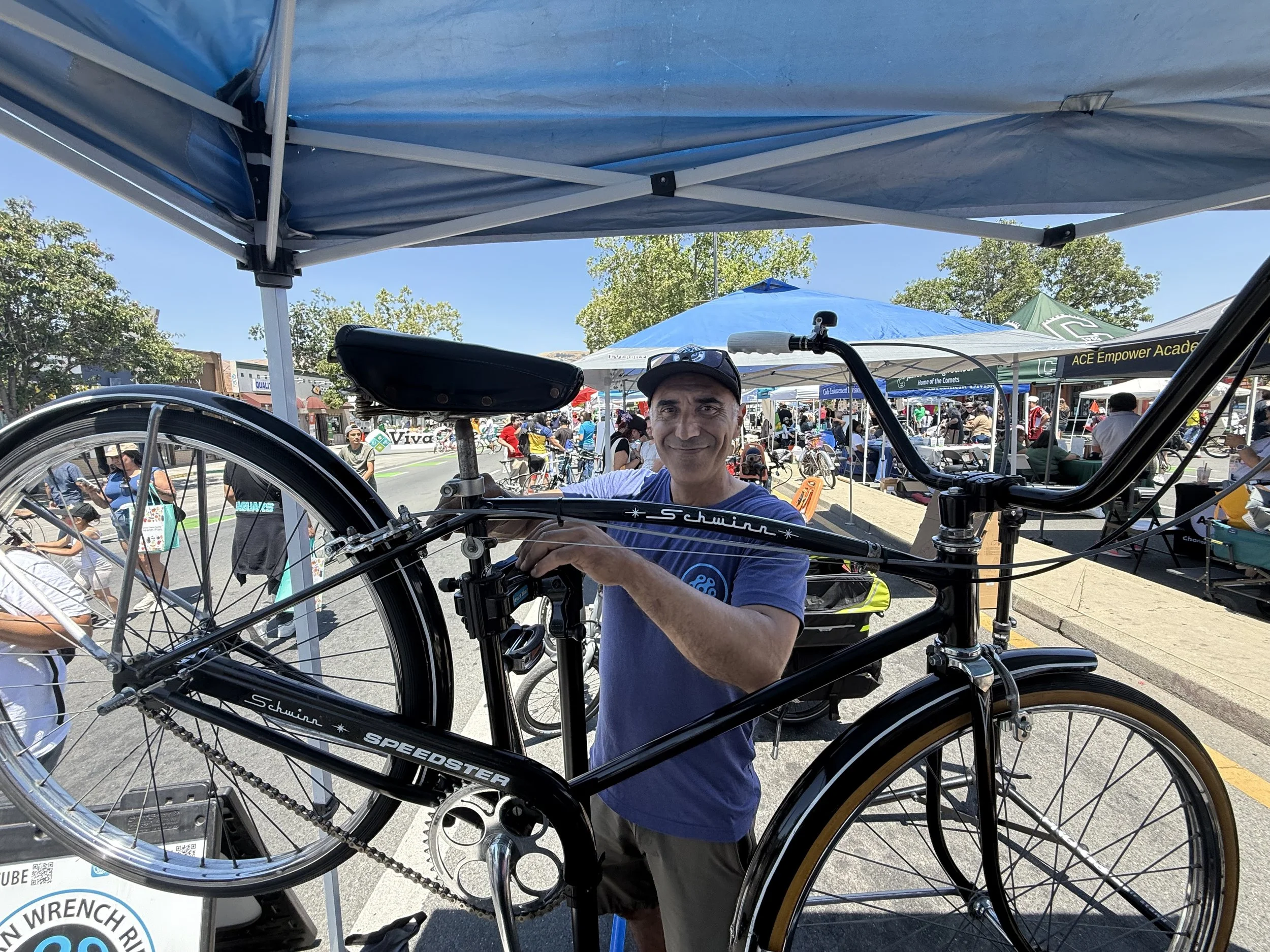
Need Your Bike Repaired Quickly in San Jose?
Need bicycle repair in San Jose? Bike Teacher offers convenient repair appointments with quick turnaround and possible same-day service. Serving San Jose since 2013.
Waiting several days—or sometimes weeks—to get a bicycle repaired can be frustrating, especially when you depend on your bike for transportation, exercise or weekend rides.
Bike Teacher offers bicycle repair in San Jose by appointment, often with little or no waiting period. Depending on the repair and parts availability, you may be able to wait while the work is completed or leave your bicycle for a few hours and pick it up later the same day.
Bicycle Repair Without the Long Shop Wait
Many bicycle shops become especially busy during warmer weather and before major riding events. Even a relatively straightforward repair can sometimes require leaving your bike for several days.
Bike Teacher operates differently. Because repairs are scheduled by appointment, your bicycle can receive focused attention at the time you bring it in. There is no guarantee that every repair can be completed immediately, but many common services can be handled quickly.
Possible same-day bicycle repairs include:
Flat-tire and tube replacement
Brake adjustments
Derailleur and shifting adjustments
Chain replacement
Basic tune-ups
Safety inspections
Wheel truing
Minor component replacement
Diagnosing unusual noises or performance problems
More involved repairs may require additional time, especially when replacement parts must be ordered.
Can You Wait While Your Bicycle Is Repaired?
For smaller repairs, possibly. If the necessary parts are available and the job does not uncover additional problems, you may be able to wait while the repair is completed.
For work requiring more time, you can often drop off your bicycle and return later that day. When scheduling your appointment, describe the problem as clearly as possible. Photos can also be helpful when identifying the likely repair or determining whether a particular part may be needed.
Once the bicycle is inspected, you will receive a clearer explanation of the work required.
Repairs Based on What Your Bike Actually Needs
A repair should begin with an accurate diagnosis—not a list of unnecessary services.
Bike Teacher evaluates the bicycle’s current condition and focuses on the repairs needed for safe and dependable operation. If another issue is discovered during the inspection, it can be explained before additional work is performed.
Bike Teacher services many types of bicycles, including road bikes, mountain bikes, hybrids, commuter bikes and recreational bicycles. If you are unsure whether a particular repair can be performed, contact Bike Teacher with the bicycle make, model and a brief description of the problem.
Learn More About Your Bike
Bike Teacher is also a hands-on bicycle mechanic training center. If you would rather learn how to perform common adjustments and repairs yourself, private and small-group bicycle repair classes are available.
Beginner instruction covers practical maintenance and essential repair skills, while longer programs provide more comprehensive bicycle mechanic training.
Schedule Bicycle Repair in San Jose
Bike Teacher has provided bicycle mechanic training and repair services in San Jose since 2013.
Bicycle repairs and classes are available by appointment. Quick and same-day service may be available depending on the repair, existing schedule and parts availability.
Need your bicycle repaired? Contact Bike Teacher with a description of the problem and ask about the earliest available appointment.
Bike Mechanic Course in San Jose, CA – Learn Bicycle Maintenance & Repair
"Learn essential bike repair skills in our hands-on Bike Mechanic Course in San Jose, CA. Perfect for beginners & aspiring mechanics! 🚲🔧 Sign up today!"
Are you looking for a bike mechanic course in San Jose, CA, to learn how to repair and maintain your bicycle like a pro? Whether you're a complete beginner or want to sharpen your skills, our bicycle maintenance course provides hands-on training in essential bike repairs, tune-ups, and advanced mechanic techniques.
Why Take a Bicycle Mechanic Course?
Bicycles are more than just transportation—they’re an investment. Learning bicycle maintenance ensures a longer-lasting, smoother-riding bike, whether you're a daily commuter, mountain biker, or road cyclist.
✅ Hands-on Training – Learn by working directly on bikes.
✅ Small Class Sizes – Get personalized guidance from an expert mechanic.
✅ Essential Repair Skills – Fix flat tires, tune brakes, adjust gears, and more.
✅ Career & Hobby Opportunities – Whether you want to become a bike mechanic or just maintain your own bike, this class is for you!
What You’ll Learn in Our Bicycle Repair Course
Our bicycle mechanic course is designed for beginners and intermediate riders looking to gain real-world repair skills. The curriculum includes:
🔧 Bicycle Maintenance 101 – Cleaning, lubrication, and pre-ride inspections.
🔧 Brake System Adjustments – Learn to fine-tune disc and rim brakes.
🔧 Gear & Drivetrain Tuning – Smooth shifting and chain maintenance.
🔧 Wheel Truing & Spoke Adjustments – Keep your wheels aligned and rolling smoothly.
🔧 Bottom Bracket & Headset Overhaul – Advanced techniques to keep your bike in top shape.
Who Should Take This Course?
🚲 Commuters & Recreational Riders – Save money on repairs by maintaining your own bike.
🚲 Cyclists & Racers – Gain a competitive edge with bicycle mechanic training.
🚲 Aspiring Bike Mechanics – Start a career in bike repair or open your own shop.
🚲 Parents & Families – Keep your family’s bikes safe and well-maintained.
Course Location & Details
📍 Location: San Jose, CA
📅 Class Schedule: Weekday evenings & weekends available
📞 Contact Us: Call or text 408-210-2980
🌎 Sign up today at www.biketeacher.com
Why Choose Bike Teacher?
At Bike Teacher, we offer hands-on, expert-led training in a small, focused class environment. Our bicycle repair course has helped countless students become confident in maintaining and repairing their own bikes.
🚴 Ready to begin? Start with Bike Teacher’s hands-on Beginner Class or contact Arthur to discuss the right training option.
Why Do My Disc Brakes Rub? 8 Common Causes and How to Fix Them
If you've ever heard a scraping or rubbing sound coming from your disc brakes, you're not alone. Brake rub is one of the most common issues cyclists experience, and in many cases it's easy to fix once you know what to look for.
Whether you ride a road bike, mountain bike, gravel bike, or e-bike, understanding the causes of brake rub can save you time, frustration, and unnecessary trips to the bike shop. Try a entry level class to wet your feet witht the four hour Beginner Class.
1. The Brake Caliper Is Slightly Misaligned
The most common cause of brake rub is a brake caliper that isn't perfectly centered over the rotor.
Even being off by a fraction of a millimeter can cause the rotor to lightly touch one brake pad.
What to do:
Loosen the two caliper mounting bolts slightly, squeeze and hold the brake lever, then tighten the bolts evenly before releasing the brake lever. Spin the wheel and check for rubbing. Fine adjustments by eye may still be necessary for the best alignment.
2. The Rotor Is Slightly Bent
Disc brake rotors don't have to be badly damaged to make noise. A small bend from transporting your bike, leaning it against something, or an accidental impact can create an annoying rub.
What to do:
Spin the wheel and watch the rotor pass through the brake caliper. If it moves side to side, the rotor may need careful straightening with a rotor truing tool.
3. The Wheel Isn't Fully Seated
If the wheel isn't completely seated in the dropouts or axle mounts, the rotor may no longer line up correctly with the brake caliper.
What to do:
Remove and reinstall the wheel, making sure the thru-axle or quick release is properly tightened.
4. The Pistons Need Attention
Over time, brake pistons can become dirty or move unevenly. One piston may extend farther than the other, causing the rotor to rub.
What to do:
The pistons may need to be cleaned and exercised so they move freely. This should be done carefully to avoid contaminating the brake pads or rotor.
5. A Rotor May Need Replacement
Rotors wear over time. If they become too thin or have excessive damage, replacing them is the safest option.
Most manufacturers specify a minimum rotor thickness. Measuring the rotor with a caliper can tell you if it has reached its wear limit.
6. New Brake Pads Need to Be Bedded In
Fresh brake pads or a new rotor sometimes make light noises until they've been properly bedded in.
Proper bedding transfers an even layer of pad material to the rotor, improving braking performance and reducing unwanted noise.
7. Dirt or Debris Is Trapped
A small pebble, mud, or trail debris can become lodged between the brake pad and rotor.
What to do:
Inspect both sides of the caliper and remove any debris before continuing your ride.
8. The Brake Was Never Properly Adjusted
Sometimes a brake simply wasn't adjusted correctly during installation or after service.
A complete inspection includes checking rotor condition, pad wear, caliper alignment, wheel installation, and overall brake function.
Don't Ignore Brake Rub
Light brake rub may seem like a minor annoyance, but it can reduce efficiency, create unnecessary wear, and sometimes point to a larger issue.
Learning how to diagnose the cause instead of simply guessing can make bicycle maintenance much less frustrating.
Learn Bicycle Repair at Bike Teacher
At Bike Teacher in San Jose, California, students learn bicycle repair through hands-on instruction in a real workshop. Instead of just watching videos, you'll work on actual bicycles and learn how to diagnose problems, make accurate adjustments, and understand why each repair works.
Whether you're maintaining your own bike or building skills to work on bikes professionally, the goal is to help you become a more confident mechanic.
If you've ever wanted to understand your bike instead of just fixing the symptoms, I'd love to help you learn.
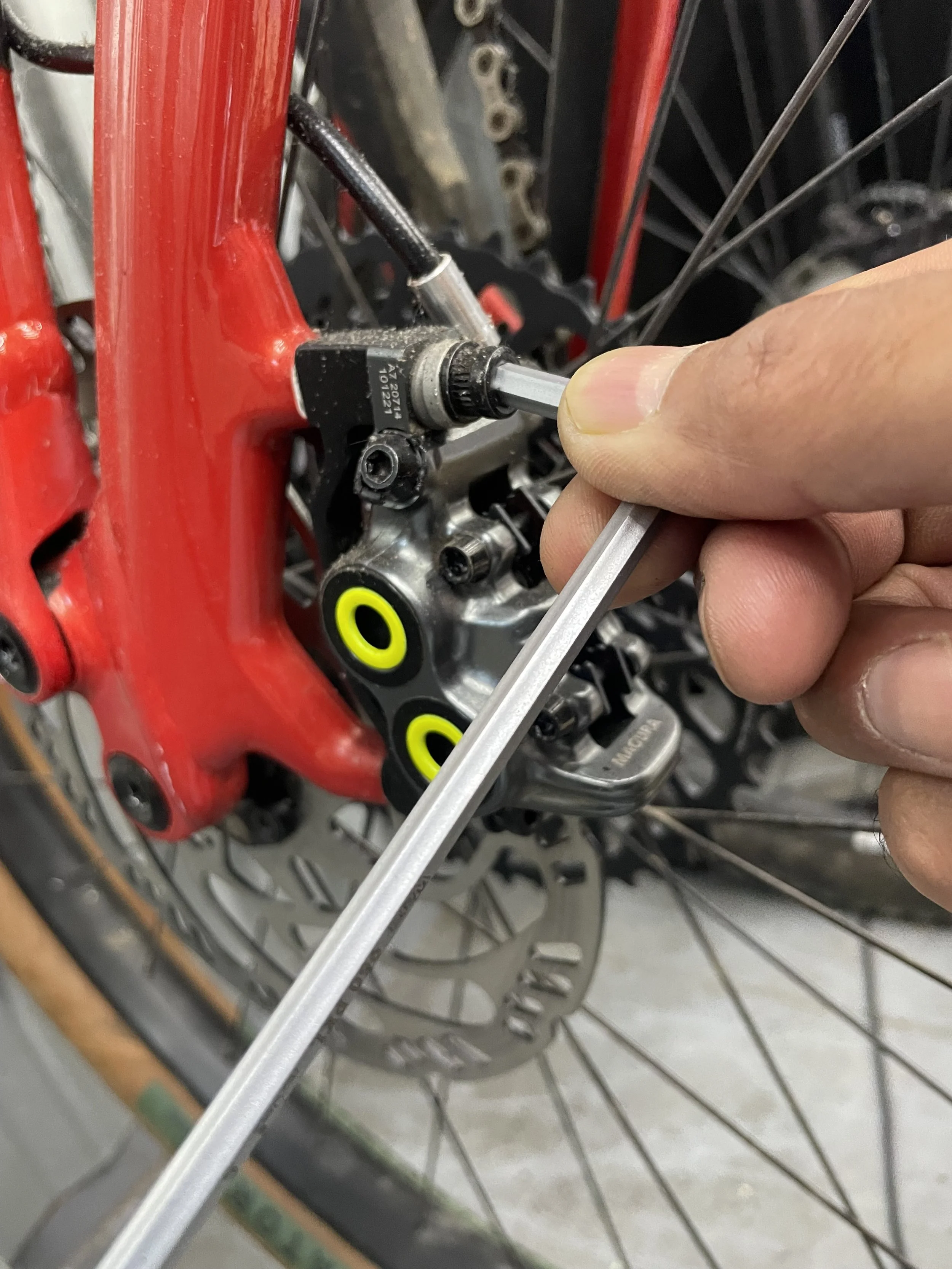
Why Do Bike Disc Brakes Squeal? 7 Common Causes and Fixes
Few bicycle noises get your attention like a loud disc-brake squeal. It may happen only on the first stop of the morning, after riding through water, or every time you touch the brake lever.
The noise can be annoying, but it can also indicate contamination, improper break-in, worn components, or another condition affecting braking performance. The sound alone does not identify the cause—the entire brake system needs to be inspected.
Here are seven common reasons bicycle disc brakes squeal and what can be done about them.
1. The Rotor Is Wet
If your brakes are normally quiet but become noisy after riding through rain, puddles, or morning moisture, the problem may be temporary.
Water changes the friction between the brake pads and rotor. The resulting vibration can produce a surprisingly loud sound. The noise will often disappear after several controlled brake applications dry the system.
Temporary noise in wet conditions does not automatically mean something is damaged. However, continued noise after the brakes have dried deserves closer inspection.
2. The Pads or Rotor Are Contaminated
Contamination is one of the most common causes of persistent disc-brake squeal.
Possible contaminants include:
Chain lubricant
Bicycle polish
Degreaser
Hydraulic brake fluid
Grease
Oil transferred from your hands
Aerosol products sprayed near the brakes
Brake pads are porous and can absorb oil. Once contaminated, they may squeal and provide noticeably less stopping power. Cleaning the rotor alone will not necessarily solve the problem if the pads have already absorbed the contaminant.
The source must also be identified. Installing new pads without correcting a leaking caliper or careless lubrication habit will allow the problem to return.
Never spray chain lubricant or bicycle cleaner toward the brake rotor. Apply lubricant carefully to the chain and wipe off the excess.
3. New Pads and Rotors Were Not Properly Bedded In
New brake pads and rotors require a break-in process commonly called bedding in.
Controlled stops transfer a thin, even layer of pad material onto the rotor’s braking surface. This helps the brake produce consistent stopping power with less noise.
Skipping this process—or repeatedly coming to a complete stop while holding new brakes hard—can leave an uneven layer on the rotor. That uneven surface may cause vibration, noise, and inconsistent braking.
The correct procedure varies by manufacturer. A typical process involves repeated controlled decelerations without locking the wheels, followed by allowing the brakes to cool.
Always follow the instructions for your particular brake and pad system.
4. The Brake Pads Are Glazed
Glazing occurs when excessive heat or improper braking leaves the pad surface smooth and hardened.
Glazed pads may appear shiny and can produce both noise and reduced braking performance. Long descents, dragging the brakes continuously, or overheating a lightly built brake system can contribute to glazing.
A mechanic should inspect the pads and rotor before deciding whether the components can be serviced or should be replaced. Repeated overheating may also indicate that the bicycle needs a different pad compound, larger rotors, improved braking technique, or another setup change.
5. The Caliper or Rotor Is Misaligned
A squeal is different from the light scraping sound usually associated with brake rub, but alignment problems can contribute to vibration and noise.
Possible issues include:
A caliper that is not centered over the rotor
A bent rotor
A wheel that is not seated correctly
A loose thru-axle or quick release
Loose rotor or caliper hardware
Uneven piston movement
If you hear a repeating sound once per wheel revolution, the rotor may be slightly out of true. If you hear constant contact while the wheel spins, read our related article, Why Do Bike Disc Brakes Rub?
Because brakes are safety-critical, do not continue riding if the wheel is loose, hardware is moving, or braking feels unpredictable.
6. The Brake Pads Are Worn or Installed Incorrectly
Brake pads become thinner with use. How quickly they wear depends on riding conditions, rider weight, terrain, braking habits, and pad material.
Wet or gritty riding can accelerate wear considerably. A pad that looks acceptable from above may be unevenly worn when removed and inspected.
Different manufacturers specify different minimum pad and rotor measurements, so there is no universal replacement number for every brake. The proper specifications should be checked for the exact model.
Pads must also be compatible with the caliper and rotor. Some rotors are intended for particular pad compounds. Installing an incompatible combination can create noise, excessive wear, or poor performance.
7. The Noise Is Coming From Somewhere Else
Not every noise heard while braking is created by the brake pads.
Other possibilities include:
A loose headset
Loose hub bearings
A moving axle
Loose spokes
Rotor hardware
Caliper mounting hardware
Movement between the frame, fork, and brake mount
A proper diagnosis involves checking the complete front or rear assembly instead of replacing parts based only on the sound.
This is one reason an experienced bicycle mechanic can often solve persistent noise more efficiently than repeatedly changing pads or applying different cleaners.
What Should You Do First?
If the brakes became noisy after a wet ride but still feel powerful and consistent, allow them to dry and see whether the noise disappears.
If they were previously quiet and suddenly begin squealing, inspect the rotor for obvious contamination and check whether the wheel and axle are properly secured.
A rotor can generally be cleaned with manufacturer-approved methods, often using clean isopropyl alcohol and a lint-free cloth. However, contaminated pads may require replacement. Do not apply household oils, automotive brake products, lubricants, or unapproved chemicals to a bicycle brake system.
Stop riding and have the bicycle inspected if:
Braking power has decreased
The lever pulls unusually close to the handlebar
Brake fluid is visible
The wheel or rotor feels loose
The brake pulses severely
The pads are excessively worn
You are uncertain whether the bicycle is safe
Learn Bicycle Brake Repair in San Jose
Disc-brake diagnosis involves more than making the noise disappear. A mechanic needs to determine why it started and confirm that the brake is safe and operating correctly.
At Bike Teacher in San Jose, students receive hands-on bicycle repair instruction in a small-class environment. Depending on the course, training can include brake inspection, pad replacement, caliper adjustment, rotor evaluation, drivetrain service, and systematic bicycle diagnosis.
Whether you want to maintain your own bikes or develop professional bicycle-mechanic skills, Bike Teacher offers flexible, customizable instruction based on your goals.
Bike Teacher has provided hands-on bicycle mechanic training since 2013.
Ready to improve your bicycle-repair skills?
Explore our Beginner Bicycle Maintenance Class or 12-Hour Advanced Bicycle Maintenance Class, or contact Bike Teacher to discuss the right training option for you.
How to Become a Bicycle Mechanic: Hands-On Training in San Jose
If you want to become a bicycle mechanic, you may wonder whether you need previous experience, a certification, or years of training before you can work confidently on bikes.
The good news is that many successful bicycle mechanics begin with little or no professional experience. What matters most is developing a solid understanding of bicycle systems—and getting enough hands-on practice to diagnose problems and complete repairs correctly.
Start With the Fundamentals
A strong bicycle mechanic needs more than the ability to follow instructions. You need to understand how different components work together and how one adjustment can affect the rest of the bicycle.
Your initial training should include skills such as:
Performing a bicycle safety inspection
Fixing flat tires and replacing tubes
Adjusting rim and disc brakes
Adjusting derailleurs and shifting
Cleaning and lubricating drivetrains
Identifying worn or damaged components
Using bicycle tools correctly
Recognizing when a repair requires additional service
These fundamentals are valuable whether you want to maintain your own bicycle, help family and friends, volunteer at a community bike program, or pursue professional mechanic work.
Get Real Hands-On Experience
Bicycle repair is a physical skill. Videos and manuals can introduce a procedure, but they cannot tell you whether a bearing adjustment feels correct, why a derailleur still shifts poorly, or what to do when a repair does not go as planned.
Hands-on bicycle mechanic training allows you to work through those situations with an instructor present. You can ask questions, correct mistakes and understand why a particular repair method works.
At Bike Teacher, students work directly on bicycles and components in a practical shop environment. Classes are private or limited to very small groups, allowing the instruction to be adjusted to each student’s experience and goals.
Students are also welcome to bring their own bicycles when appropriate. Working on a familiar bike can make the training immediately useful.
Choose Training That Matches Your Goal
Not everyone needs the same amount of training.
A beginner may start with a four-hour class to learn essential maintenance and repair skills. Someone who wants broader mechanical ability may choose a longer course with more time for drivetrain, brake and component work.
Students interested in employment, starting a repair service, or developing professional-level skills generally benefit from a more comprehensive bicycle mechanic program. Bike Teacher offers several training lengths, including 4-hour, 12-hour, 40-hour and 70-hour options. Wheel-building instruction is also available.
Classes are customizable, so the training can focus on the skills most relevant to the student.
Build Confidence Through Repetition
Completing a class is an important beginning, but becoming a capable mechanic also requires repetition. Continue practicing inspections, adjustments and common repairs until you can perform them consistently.
When something does not work correctly, slow down and diagnose it. Troubleshooting is one of the most valuable skills a mechanic can develop.
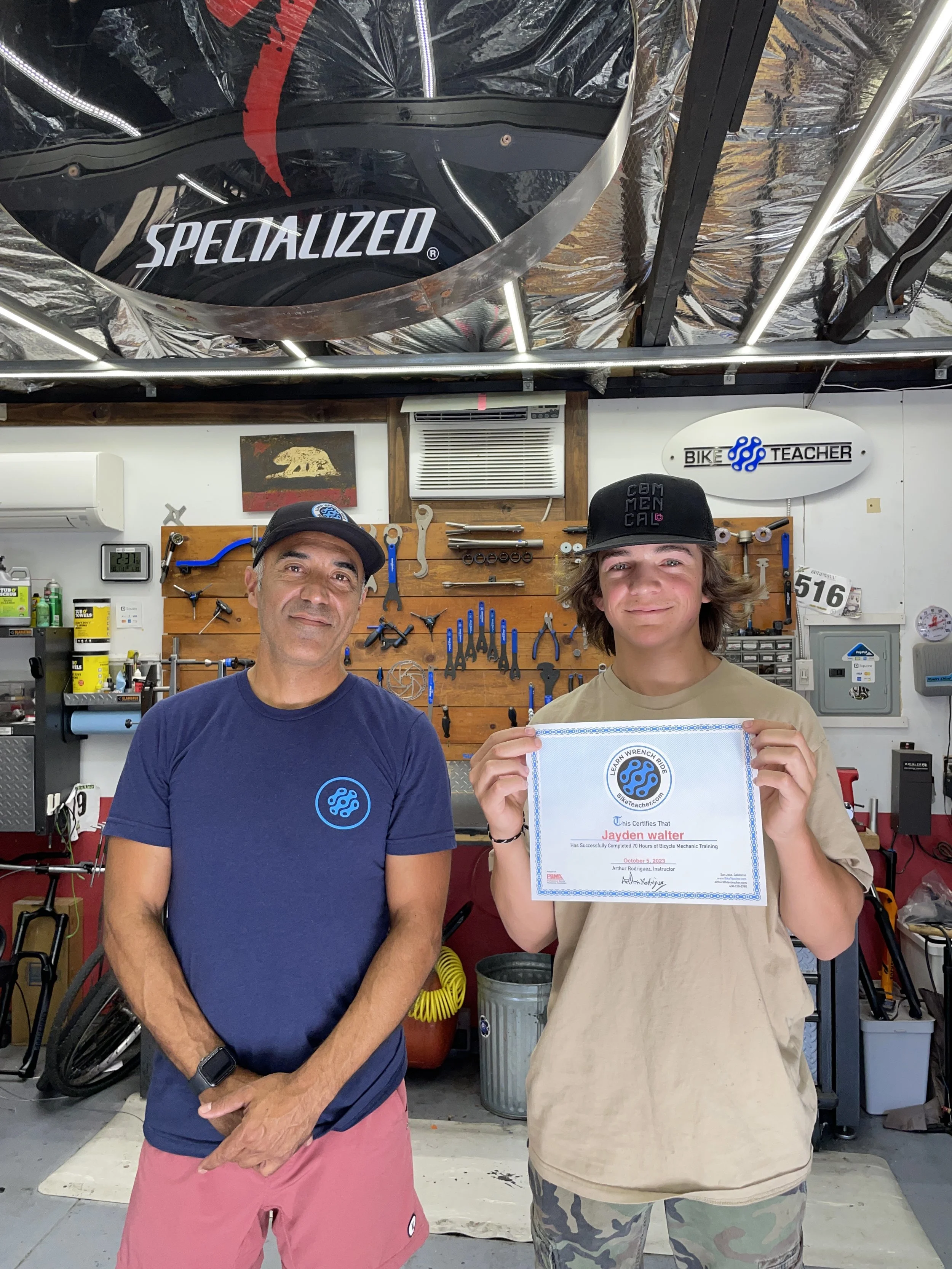
Students completing Bike Teacher’s longer programs receive a certificate of completion. This documents the training completed, but it should not be confused with a government-issued bicycle mechanic license or certification.
Bicycle Mechanic Training in San Jose
Bike Teacher has provided hands-on bicycle mechanic instruction in San Jose since 2013. Training is available for complete beginners, experienced riders, aspiring professional mechanics and people interested in operating their own repair business.
Classes and bicycle repair services are available by appointment. Scheduling is flexible, and classes are offered throughout the year rather than only on fixed semester dates.
Ready to begin? Contact Bike Teacher to discuss your experience, goals and available class dates.
Suggested button:
Ask About Class Dates
Suggested photo:
Use a real photo of a student performing a hands-on repair—ideally adjusting a derailleur, working at a repair stand or using a torque wrench—with you visible providing instruction. Avoid a posed group photograph for this article.
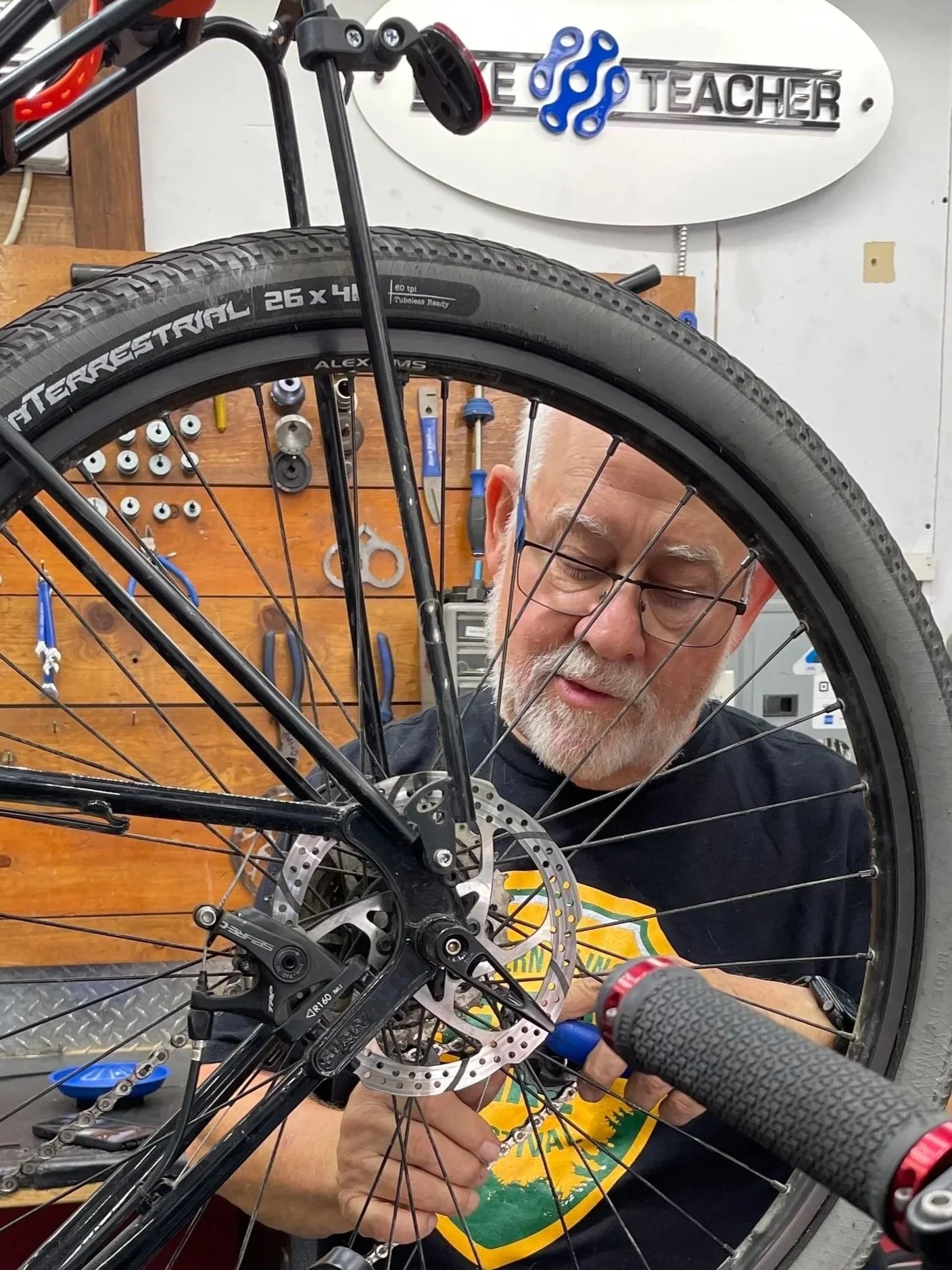
Bicycle Repair Classes in California: Start Small and Build Your Skills
You don’t have to commit to a full mechanic training program to start learning bicycle repair. Whether you want to maintain your own bike or explore more extensive training, a shorter class can help you take that first step.
At Bike Teacher in San Jose, California, instruction centers on hands-on practice, with time to ask questions and work through the skills you’re learning.
Start with a beginner class
Our 4-hour beginner bicycle repair class costs $255 and offers an approachable introduction to working on bikes.
You don’t need to arrive already knowing the tools or terminology. The goal is to help you become more comfortable working on a bicycle and build a foundation for continued learning.
If you decide to continue, your completed beginner class hours can count toward Bike Teacher’s 40-hour program. You can start small and build on that experience.
Learn in a small class
Classes have a maximum of four students, and some sessions are one-on-one. That means opportunities to ask questions, receive feedback, and practice with guidance from your instructor.
You’ll spend time working on bikes and developing skills through practice.
Choose the training that fits your goals
Bike Teacher offers beginner classes, 40-hour and 70-hour training options, and wheel-building instruction.
A shorter class can be a starting point for maintaining your own bicycle. Longer programs provide more time to develop and practice a broader range of mechanic skills.
If you’re unsure which option fits, tell us what you’d like to learn and how much experience you have. We can help you choose.
Ask about class dates
Bike Teacher has taught bicycle repair since 2013. Classes take place in San Jose, with flexible scheduling and students welcome from across California and beyond.
Ready to get started? Contact Bike Teacher to ask about class dates and discuss the right training option for you.
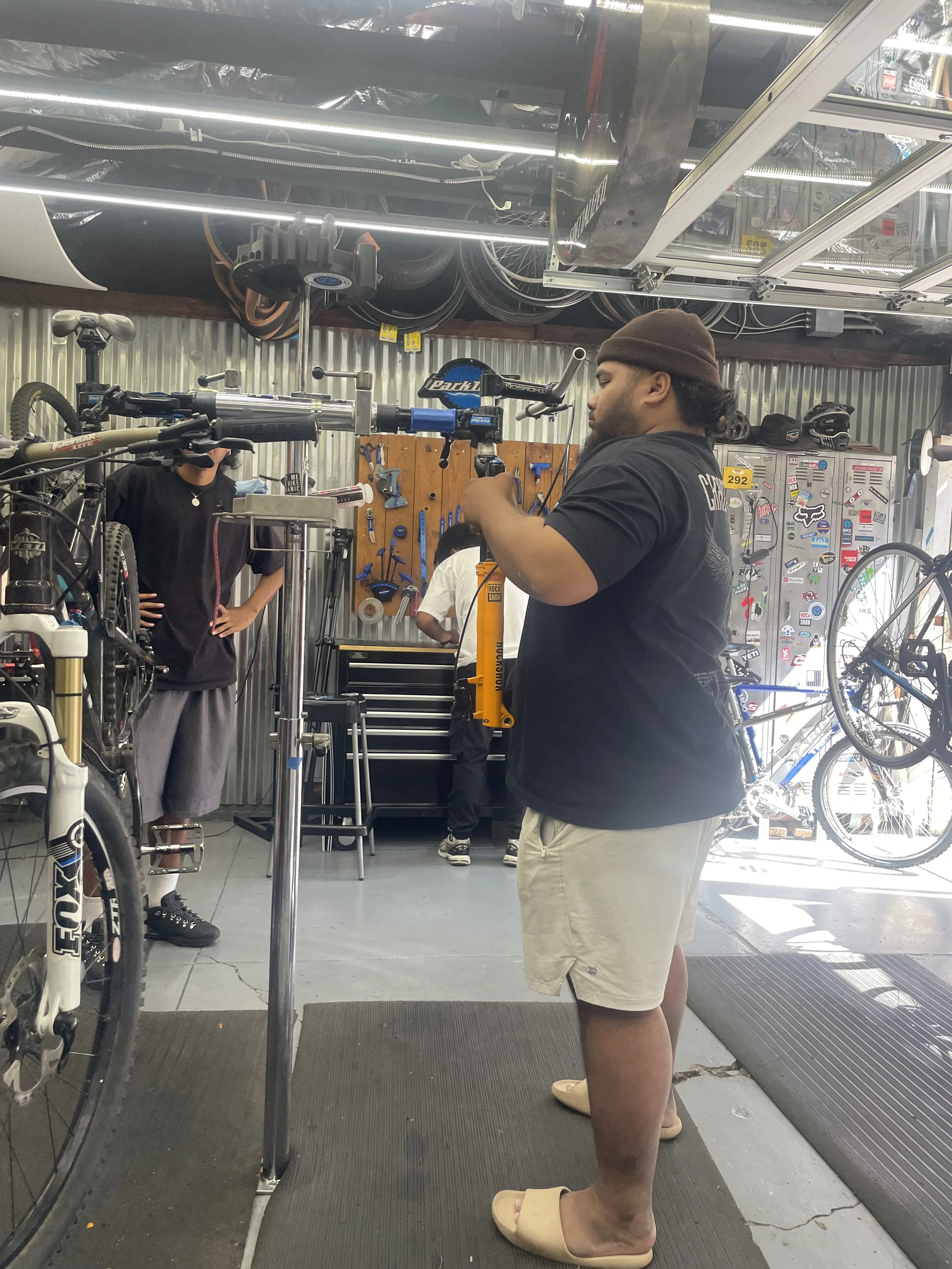
Hands-On Bicycle Mechanic Training in San Jose
Watching bicycle-repair videos can be helpful, but nothing replaces working on a real bike with an experienced instructor beside you. At Bike Teacher, students learn bicycle maintenance and repair through hands-on practice in a small, supportive class environment.
Learn by Working on a Bicycle
Bike Teacher classes are designed for beginners, cycling enthusiasts, home mechanics, and people interested in developing professional bicycle-repair skills. You do not need previous mechanic experience to get started.
Students learn by performing repairs and adjustments themselves—not simply by watching demonstrations. Depending on the class, instruction may include:
Bicycle safety inspections
Flat repair and tire installation
Brake adjustment and service
Derailleur and shifting adjustment
Chain and drivetrain maintenance
Wheel truing and wheel building
Bearing adjustment
Bicycle troubleshooting and repair procedures
Students may bring their own bicycles to class, making it possible to learn while working on equipment they already ride and want to understand better.
Small Classes and Individual Instruction
Bike Teacher keeps classes small, with no more than four students, so everyone receives meaningful individual instruction. Beginner classes are frequently taught one-on-one.
Instead of following a large, impersonal group, students can ask questions, repeat procedures, and work at a pace that helps them understand both how a repair is performed and why it works.
Classes for Different Goals
Bike Teacher offers several training options, including introductory instruction, a 12-hour course, comprehensive 40-hour and 70-hour mechanic programs, and dedicated wheel-building instruction.
Whether your goal is to maintain your own bicycle, become more confident with repairs, prepare for work in a bike shop, or improve skills you already have, instruction can be matched to your experience and objectives.
Serving San Jose Since 2013
Bike Teacher has provided hands-on bicycle mechanic education in San Jose since 2013. Training covers road, mountain, gravel, commuter, and electric bicycles.
Classes are scheduled around student availability and are available Monday through Friday, with some Saturdays. Bicycle mechanic classes and full-service bicycle repair are available by appointment.
Ready to learn how to work on bicycles with confidence?
Call or text Bike Teacher at (408) 210-2980, or visit biketeacher.com to learn more about available classes.

Can a Beginner Learn Bicycle Repair Without Any Experience?
Many people are interested in learning bicycle repair but worry that they need mechanical experience before taking a class. The short answer is no—you do not need previous experience to begin learning how to work on bicycles.
A good beginner bicycle repair class starts with the fundamentals and builds from there. That includes learning the names and purposes of common bicycle components, how to use tools correctly, and how to inspect a bike before making adjustments.
At Bike Teacher, beginner students learn hands-on skills such as:
Performing a basic bicycle safety inspection
Removing and installing wheels
Repairing a flat tire
Inspecting tires, chains, gears, and brakes
Making basic brake and shifting adjustments
Recognizing worn or damaged components
Using bicycle tools properly
More importantly, students learn how to approach a repair in the correct order. Instead of immediately turning adjustment screws or replacing parts, we look at the symptoms, inspect the complete system, and determine what is actually causing the problem.
Bike Teacher classes are kept small so students receive individual instruction and have time to practice. Students may also bring bikes to class, allowing them to learn from real problems and become more familiar with the bicycles they ride.
Whether you want to maintain your own bike, become more confident with trailside repairs, or begin developing professional bicycle mechanic skills, you can start without previous experience.
Bike Teacher offers hands-on bicycle mechanic training in San Jose, California. Classes are ongoing and can be scheduled around your availability.
Learn. Wrench. Ride.

Why Does My Bike Keep Skipping Gears?
A bike that skips gears, hesitates when shifting, or unexpectedly jumps between gears can be frustrating—and sometimes unsafe. The cause isn’t always as simple as turning the derailleur’s barrel adjuster.
Common causes of poor shifting include:
A stretched or damaged shift cable
Worn or contaminated cable housing
A bent derailleur hanger
Incorrect derailleur adjustment
A worn chain or cassette
A loose cassette or rear wheel
Incompatible drivetrain components
One of the most important parts of bicycle repair is learning how to diagnose the problem before making adjustments. For example, adjusting the rear derailleur won’t solve the problem if the derailleur hanger is bent or the chain and cassette are worn.
At Bike Teacher, students learn a step-by-step diagnostic process. We inspect the wheel installation, drivetrain wear, derailleur alignment, cable condition, limit screws, and indexing before deciding what needs to be adjusted or replaced.
This approach helps prevent unnecessary parts replacement and teaches you how the entire shifting system works together.
If your bike isn’t shifting correctly, Bike Teacher offers bicycle repair services and hands-on bicycle mechanic classes in San Jose. Classes are kept small for better individual instruction, and students may bring bikes to class for real-world practice.
Learn how to diagnose the problem—not just turn an adjustment screw.
Bike Teacher
Hands-on bicycle mechanic training and bicycle repair in San Jose, California
Learn. Wrench. Ride.
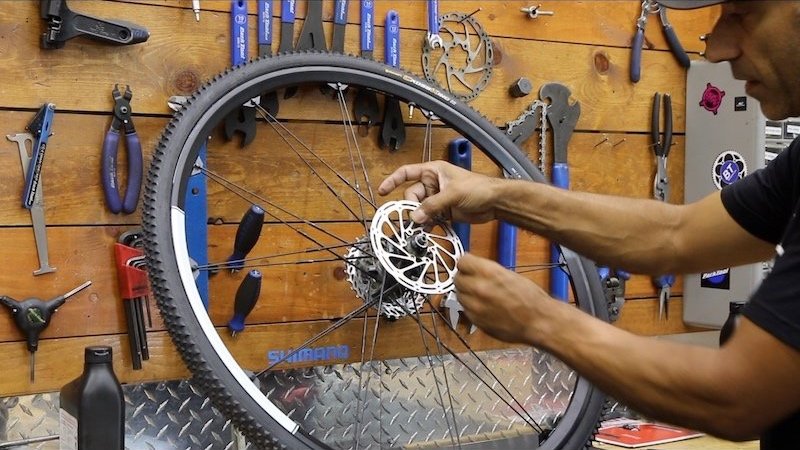
Should You Learn to Repair Your Own Bike or Take It to a Bike Shop?
If you own a bicycle, you've probably asked yourself this question at some point:
Should I fix it myself, or should I take it to a bike shop?
The answer depends on the repair, your experience, and whether you're willing to learn. The good news is that many bicycle repairs are easier than people think. With the right instruction and a few quality tools, most riders can confidently perform routine maintenance and keep their bikes running smoothly.
Repairs Most Cyclists Can Learn
Many common repairs don't require years of experience. These are skills that almost anyone can learn with hands-on instruction:
Repairing a flat tire
Replacing tubes and tires
Cleaning and lubricating the drivetrain
Adjusting derailleurs for smooth shifting
Adjusting brakes
Installing new brake pads
Replacing chains
Performing routine safety inspections
Learning these skills not only saves money, but also gives you confidence every time you ride.
Repairs That May Require More Experience
Some jobs require specialized tools, careful measurements, or advanced knowledge. Examples include:
Wheel building
Suspension service
Hydraulic brake bleeding
Headset facing and frame preparation
Press-fit bottom bracket installation
Major frame damage assessment
Electronic drivetrain diagnostics
These repairs can certainly be learned, but they're usually best tackled after building a strong foundation in bicycle mechanics.
Why Learning Bicycle Repair Is Worth It
Every cyclist eventually encounters mechanical problems. Whether it's a flat tire miles from home or shifting that suddenly stops working, knowing how to diagnose the issue can make the difference between finishing your ride and calling for a pickup.
Learning bicycle repair also helps you:
Save money on routine maintenance.
Understand how your bike works.
Ride with greater confidence.
Spot problems before they become expensive repairs.
Make better decisions when buying replacement parts.
Many of my students tell me that after taking a class, they enjoy riding even more because they understand what their bike is doing and how to keep it performing at its best.
Why Hands-On Learning Matters
There are thousands of repair videos online, and they're a great resource. But videos can't tell you if your derailleur adjustment is just right or whether you're applying the correct torque to a bolt.
Hands-on instruction allows you to ask questions, receive immediate feedback, and practice techniques on real bicycles using professional tools. That's often the difference between simply watching a repair and truly learning how to perform it.
Bring Your Own Bike and Learn on It
One of the advantages of training at Bike Teacher is that students are encouraged to bring their own bicycles to class. Instead of practicing on an unfamiliar bike, you'll learn while working on the bike you ride every week.
That means you'll leave class with new skills and a bike that's been properly inspected and adjusted.
Start Building Your Skills
Whether you're completely new to bicycle maintenance or want to develop professional mechanic skills, learning how to repair your own bike is an investment that pays dividends for years.
At Bike Teacher in San Jose, classes are intentionally kept small so every student receives plenty of individual instruction. From beginner maintenance to advanced mechanic training and wheel building, you'll gain practical experience that you can immediately apply to your own bicycle.
If you've ever wanted to understand how your bike really works, there's no better time to start. Learning bicycle repair isn't just about fixing bikes—it's about becoming a more knowledgeable, confident cyclist.
How to Tell If Your Bicycle Chain Needs Replacing (Before It Ruins Your Cassette)
One of the most overlooked maintenance items on a bicycle is the chain. Many riders wait until their bike starts skipping gears or making noise before thinking about replacing it. Unfortunately, by that point, the chain may have already caused unnecessary wear to the cassette and chainrings.
The good news is that checking chain wear is quick, inexpensive, and can save you hundreds of dollars in replacement parts.
Does a Bicycle Chain Really Stretch?
Not exactly.
The side plates don’t actually stretch. Instead, the pins and rollers wear over thousands of miles. As these parts wear, the distance between the chain links gradually increases. This is commonly called “chain stretch,” even though it’s really wear.
As the worn chain meshes with the cassette and chainrings, it slowly wears those teeth to match the longer chain. If you wait too long, installing a new chain alone may cause poor shifting or skipping because the cassette has worn with the old chain.
How Do You Check Chain Wear?
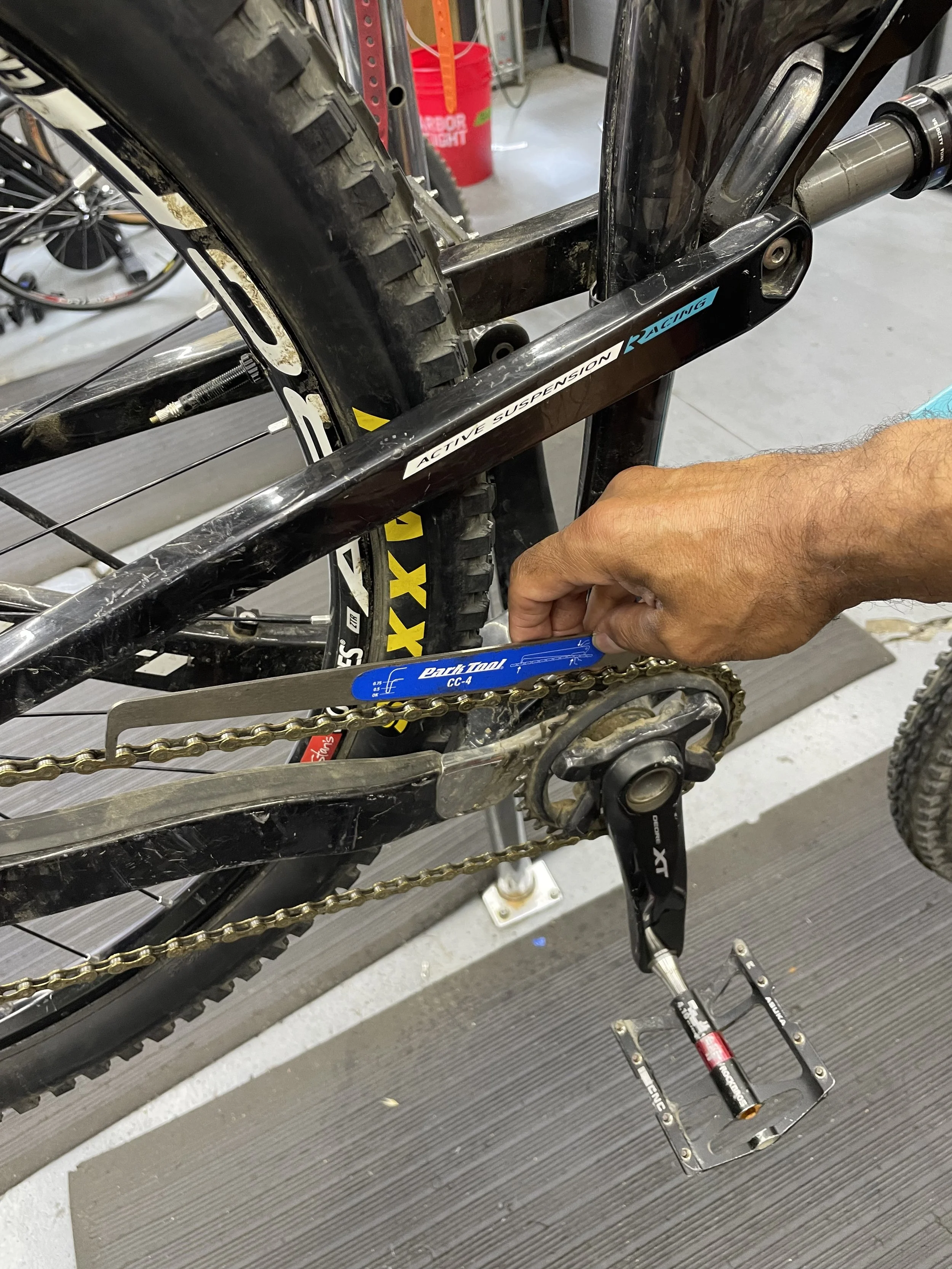
The easiest method is with a chain wear gauge, such as the Park Tool CC-4.
The gauge quickly tells you whether your chain is still within its service life or if it’s time to replace it. It only takes a few seconds and can prevent much more expensive repairs later.
When Should You Replace Your Chain?
There’s no single mileage that applies to every rider.
Chain life depends on several factors:
Riding conditions
Weather
Cleaning and lubrication
Rider power
Terrain
Chain quality
Checking your chain regularly is much more accurate than relying on mileage alone.
Why Early Replacement Saves Money
Replacing a chain at the proper time is one of the least expensive maintenance jobs you can do.
Ignoring chain wear can lead to replacing:
The cassette
Chainrings
Sometimes even derailleur pulleys
A simple chain replacement often costs far less than replacing an entire drivetrain.
Learn to Inspect Your Own Bike
One of the first skills students learn at Bike Teacher is how to inspect a bicycle for wear before replacing parts. Understanding chain wear, cassette wear, and drivetrain condition helps riders make informed decisions instead of guessing.
Whether you’re maintaining your own bike or want to build professional mechanic skills, learning proper inspection techniques can save money, improve shifting performance, and keep your bike riding like new.
If you’d like to learn these skills hands-on, Bike Teacher offers small-group bicycle mechanic training classes in San Jose for beginners through advanced students.
Click on image to view the Beginner Class.
Why Do My Bike Gears Skip? Common Causes and Easy Fixes
Few things are more frustrating than pedaling hard and feeling your bike hesitate, skip, or make unexpected clicking noises while shifting. Whether you're riding on the road, mountain biking, or commuting, skipping gears usually means something needs attention—but it doesn't always require expensive repairs.
Here are the most common reasons your gears skip and what you can do about them.
1. Dirty Drivetrain
The number one cause of poor shifting is a dirty chain and cassette. Dirt, old lubricant, and grime prevent the chain from engaging the gears properly.
Solution:
Clean the chain, cassette, and chainrings.
Apply a quality bicycle chain lubricant.
Wipe away excess lube to avoid attracting more dirt.
2. Cable Stretch or Electronic Adjustment
Mechanical shifting systems naturally experience slight cable stretch over time. Even a small amount can cause hesitation between gears.
Electronic shifting systems can also require adjustment after impacts or normal use.
Solution:
A minor derailleur adjustment often restores crisp shifting.
3. Bent Derailleur Hanger
One small bump or bike tip-over can bend the derailleur hanger just enough to affect shifting.
Common symptoms include:
Skipping in only a few gears.
Inconsistent shifting.
The derailleur appearing slightly crooked when viewed from behind.
A professional alignment tool is needed to properly straighten the hanger.
4. Worn Chain
Chains gradually wear as they accumulate miles. Once stretched beyond acceptable limits, they no longer mesh correctly with the cassette.
Replacing the chain before it becomes excessively worn can significantly extend the life of your cassette and chainrings.
5. Worn Cassette or Chainrings
If a worn chain has been used too long, the cassette teeth begin to wear into matching shapes. Installing only a new chain may actually make skipping worse.
In many cases, both the chain and cassette should be replaced together.
6. Poor Derailleur Adjustment
Modern drivetrains require precise adjustment. Small changes in cable tension or electronic indexing can dramatically improve shifting performance.
Proper adjustment includes:
Indexing
Limit screw adjustment
B-tension adjustment
Hanger alignment
Prevent Problems Before They Start
Routine maintenance goes a long way toward preventing shifting issues.
A simple tune-up can:
Improve shifting performance.
Reduce drivetrain wear.
Extend component life.
Make every ride more enjoyable.
Need Help?
At Bike Teacher in San Jose, I not only repair bicycles, but I also teach riders how to understand and maintain their own bikes. Whether you're looking for a professional tune-up or want to learn bicycle mechanics yourself, I'd be happy to help.
From beginner maintenance classes to advanced mechanic training, you'll gain the confidence to diagnose and fix common bicycle problems on your own.
Happy riding!
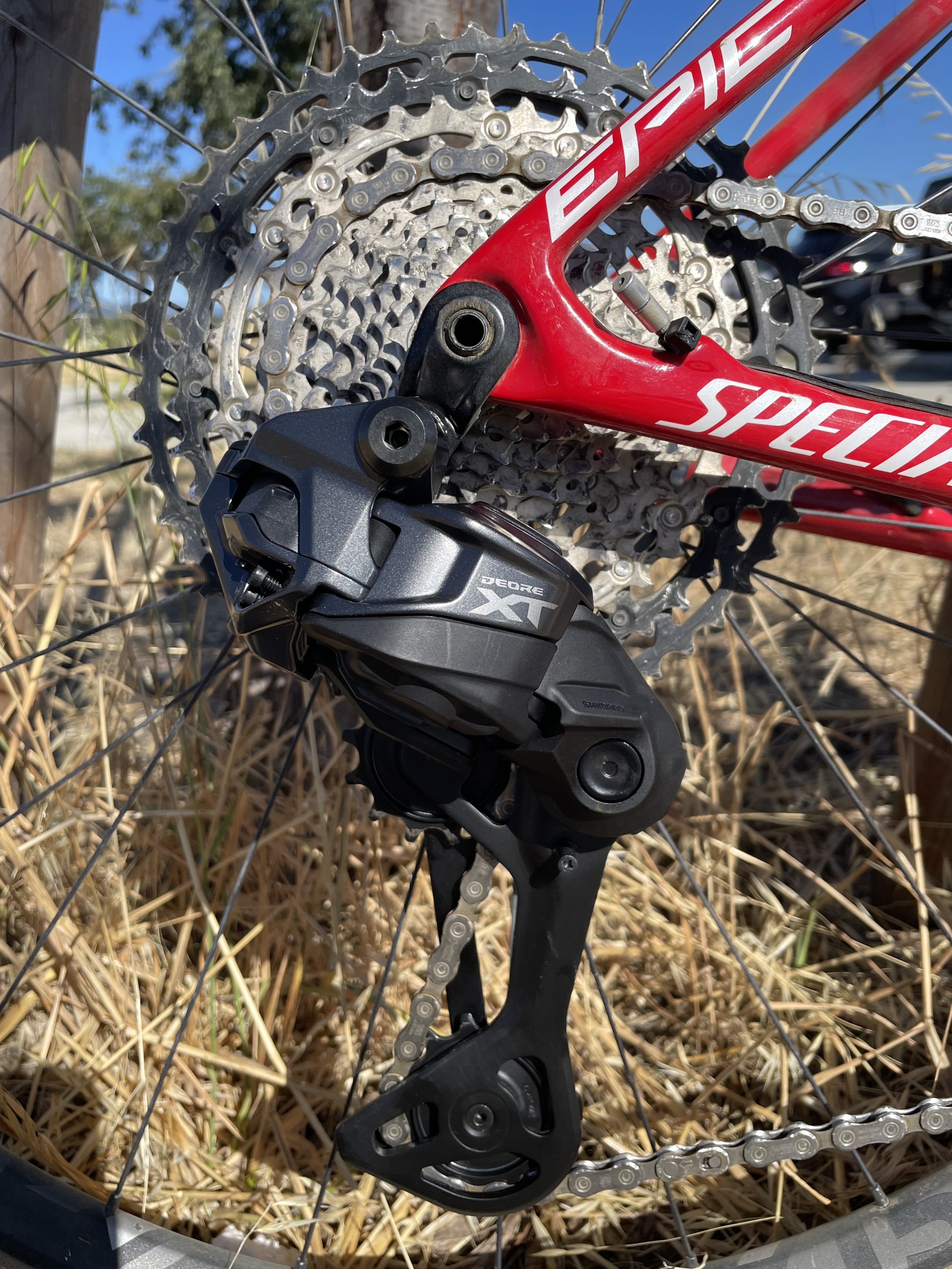

Fast, Friendly, and Professional: Bicycle Repair Services in San Jose
Need fast, friendly bike repair in San Jose? I offer expert service with quick turnaround on everything from flat fixes to full tune-ups. Located in Willow Glen, I work by appointment—text or call 408-210-2980 to book. Visit BikeTeacher.comfor details.
Looking for high-quality bicycle repair in San Jose without the long wait times or impersonal service? You’ve come to the right place. I’m Arthur—owner of Bike Teacher, a local home-based bike repair business located in Willow Glen. I offer fast turnaround, fair prices, and expert service, whether you need a quick fix or a full tune-up.
Call or text (408) 210-2980 for immediate appointment. Located in San Jose (Willow Glen) 923 Pine Ave 95125
🚲 Bike Repairs Done Right—By a Pro Who Teaches the Pros
With years of experience teaching bike mechanic classes in San Jose, I’ve seen it all. From noisy bottom brackets and sketchy brakes to full drivetrain replacements, I don’t just fix bikes—I explain the “why” behind the issue and help you understand what’s going on. I treat every bike like it’s my own and every customer like a neighbor.
Services Offered:
Flat tire repair
Brake and gear adjustments
Chain replacement and drivetrain cleaning
Wheel truing
Full tune-ups
Bike builds from the frame up
E-bike diagnosis and repair (yes, I work on Specialized and Bosch systems too!)
Got a vintage ride? A modern race bike? A daily commuter? I’ve worked on all types and welcome the challenge.
Fast Turnaround—No Waiting Weeks
Unlike big shops where you wait a week (or three) just for a diagnosis, I aim for a 48-hour turnaround on most repairs. Just text or call me at 408-210-2980, and we’ll set up a time to drop your bike off at my Willow Glen location. I work by appointment to give each repair the focus it deserves.
Supporting Local Means Supporting Quality
I’m not a giant bike shop with multiple locations—I’m your local bike mechanic who’s built a reputation in San Jose for reliable, knowledgeable, and honest service. Whether you're training for a race, commuting to work, or just dusting off the garage bike, I’ve got you covered.
🔧 Book your repair now:
www.biketeacher.com/service-repair
Pro tip: While you're at it, check out my hands-on bike repair classes also offered right here in San Jose. Learn how to do your own repairs and build confidence around your bike.
Spring 2025 Bike Repair Trends: Why Now Is the Perfect Time to Learn or Tune Up
Spring is here, and so is the surge in bike activity. From March through July, there's a noticeable spike in bike repair interest, peaking in early summer. That’s no surprise — it's when many riders hit the trails, streets, and bike lanes again after winter.
At Bike Teacher in San Jose, we're ready to help you ride smoothly and safely this season. Whether you're a seasoned cyclist or just getting started, now is the perfect time to learn essential bike maintenance skills or get your bike professionally serviced.
Why Spring Is the Season for Bike Maintenance
As the weather warms up, more people are dusting off their bikes and hitting the road. This increased activity leads to a higher demand for bike repairs and maintenance. Common issues include:
Flat tires
Brake adjustments
Gear tuning
Chain replacements
Addressing these problems early ensures a safer and more enjoyable riding experience throughout the season.
Learn to Fix Your Bike: Classes for Every Skill Level
Empowering yourself with bike repair knowledge not only saves money but also enhances your cycling confidence. At Bike Teacher, we offer hands-on classes tailored to various skill levels:
Beginner Class: Perfect for those new to bike maintenance.
Intermediate Class: For riders looking to deepen their repair skills.
Advanced Class: Designed for enthusiasts aiming to master complex repairs.
40-Hour Class: Comprehensive training covering all aspects of bike mechanics.
70-Hour Class: In-depth program for aspiring professional mechanics.
Pro Bike Build: Learn the intricacies of building high-performance bikes.
Wheel Building: Specialized course focusing on wheel assembly and truing.
Each class provides practical experience, ensuring you can confidently handle bike repairs and maintenance.
Professional Repair Services: We've Got You Covered
Not ready to tackle repairs yourself? No problem. Our experienced technicians at Bike Teacher offer a range of services to keep your bike in top condition:
Tune-ups
Brake and gear adjustments
Wheel truing
Chain and cassette replacements
We use high-quality tools and parts to ensure your bike performs at its best.
Stay Ahead of the Curve: Embrace the E-Bike Trend
E-bikes are gaining popularity, and with that comes the need for specialized maintenance. Our team is equipped to handle e-bike repairs, ensuring your electric ride remains efficient and safe.
Book Your Class or Service Today
Don't wait until your bike has issues. Proactive maintenance and knowledge can prevent problems down the line. Visit our website to schedule a class or service appointment. Let's make this cycling season your best yet!
How to Learn Bike Repair in San Jose (Even If You've Never Touched a Wrench)
🚴♂️ Intro: Why Learn Bike Repair?
If you’ve ever been stranded with a flat tire, tangled chain, or noisy brakes, you’ve probably thought, “I wish I knew how to fix this myself.”
The good news? You don’t need to be a pro mechanic to learn the essentials.
And if you’re in San Jose, you’ve got a local, hands-on bike repair class just around the corner.
🔧 What You’ll Learn in a Beginner Bike Repair Class
Most beginner-level classes (like the ones I teach here at Bike Teacher) are built for total newbies. No wrenching experience needed.
Here’s a peek at what you’ll be able to do after one class:
Fix a flat tire (even on tricky rims)
Adjust your brakes so they stop smoothly
Clean and lube your chain (the right way)
Diagnose common issues without guesswork
Build confidence using real bike tools
This isn’t a lecture. You’ll work on real bikes with your hands and walk away knowing how to do it yourself.
📍 Why Take a Local Class in San Jose?
YouTube videos are great—but sometimes, you need someone next to you showing you what to do.
Taking a class in San Jose means:
You get in-person feedback from a seasoned mechanic
You learn faster (and make fewer mistakes)
You can bring your own bike and ask specific questions
You connect with other riders and DIYers in your area
💡 Who This Is Perfect For
New cyclists who want to be self-sufficient
Commuters tired of paying for every minor fix
Mountain bikers who want to avoid mid-trail breakdowns
Anyone curious about bikes and how they work
🛠️ Next Class Starts Soon
If you're ready to stop Googling every time something breaks, now’s the time to act.
We run small group beginner classes right here in San Jose—tools provided, bikes welcome.
🔗 Reserve Your Spot Now ➜
Limited spaces. Classes fill up fast when the weather’s good!
✅ Final Tip
Learning bike repair isn’t just practical—it’s empowering. The first time you fix something on your own bike, you’ll know you’re not just riding—you’re in control.
🔧 What’s Trending in Bike Repair: Spring 2025 Google Search Insights
As spring rolls in and riders everywhere start pulling bikes out of storage, one thing is clear — bike repair is back in high demand. Here at Bike Teacher, we’re always looking to stay ahead of the curve. So, we turned to Google Trends to find out exactly what people are searching for when it comes to bicycle repair, maintenance, and training.
Whether you're a weekend warrior, daily commuter, or aspiring bike mechanic, these trends offer a glimpse into what’s on cyclists' minds — and how we can help.
🚴 Seasonal Spikes: The Spring Surge Is Real
Google Trends shows a notable spike in bike repair interest from March through July, peaking in early summer. That’s no surprise — it’s when many riders hit the trails, streets, and bike lanes again after winter.
What this means for you:
If your bike's been collecting dust, now is the perfect time for a tune-up or to brush up on your maintenance skills. For those of you looking to start a new side hustle or career, spring is also when demand for bike mechanics ramps up.
🌍 Where Are People Searching Most?
According to the data, the top regions searching for bike repair are:
Washington, D.C.
Colorado
Oregon
Utah
Idaho
These areas are known for their cycling culture and outdoor lifestyle, and they could be leading the way when it comes to embracing DIY repair and mechanic training.
Tip: Even if you're not in one of these states, the rising national interest means now is the time to build your skills — or get your bike professionally serviced before peak season.
🔥 Rising Topics: What’s Gaining Attention?
Here are a few fast-rising topics that caught our eye:
Kickstand (+600%)
Riders are focusing on the small stuff! We may soon drop a quick tutorial on installing and adjusting kickstands properly.Shimano (+450%)
This trusted component brand is a favorite among serious cyclists. Expect more Shimano-specific repair tips from us.Lectric (+250%)
An e-bike brand that’s trending hard. E-bike maintenance is growing — and we’ve got classes for that.Bicycle parking racks (+250%)
Urban commuters are searching for smarter storage and security options.Automotive Mechanics crossover (+200%)
This suggests people with mechanical backgrounds are exploring bike repair as a new skill set — something our training programs are perfect for.
🔍 What Are People Asking Google?
Let’s break down some of the top rising search queries:
“Bike repair near me open now”
This is all about convenience. People want fast, local options. If you’re offering mobile or same-day repair, this is your moment.“Bike tire patch kit” & “Tire patch kit”
Flat tires are a common issue, and patching is an easy first skill to learn. We’ll be posting new beginner content on tire repair soon.“Bike rentals near me”
While not directly about repair, this indicates new or occasional riders — folks who might be prime candidates for beginner mechanic training.
🛠️ How This Shapes Our Focus at Bike Teacher
The trends show that people are not only riding more — they’re eager to fix and understand their bikes themselves. At Bike Teacher, we’re here to support both ends of that spectrum:
Need a tune-up? We offer professional repair services in San Jose, CA.
Want to learn? Our hands-on bicycle mechanic classes cover everything from patching flats to full drive train overhauls.
Curious about e-bikes? We’re expanding our content and courses to meet growing interest in electric bicycle maintenance.
🏁 Final Thoughts
Google Trends gives us a peek into what riders care about — and the data says it loud and clear: bike repair is trending. Whether you're Googling how to patch a tire or thinking of becoming a certified bike mechanic, you're not alone.
Ready to ride smarter in 2025?
👉 Book a class or check out our latest YouTube videos for step-by-step repair tips.
See you in the saddle!

E-Bike Innovations and Adoption: How Electric Bikes Are Changing the Game
🚴♂️ E-Bikes: More Than Just a Ride! 🚴♂️
I know there’s a lot of talk out there about e-bikes—some love ‘em, some are skeptical. But here’s the thing: I own two e-bikes (a cargo bike with a Bosch motor and a Specialized Turbo Levo), and they bring me pure joy every time I ride!
I’ve heard the “e-bikes are for cheaters” argument, and yeah, I’ve even had my own moment of shock when I passed a mountain biker on a non-electric bike up a technical climb. But you know what? E-bikes aren’t about replacing traditional riding—they’re an extension of the riding style you love. Whether you’re cruising, tackling tough climbs, or just getting out there for the first time, an e-bike can make it all possible.
I love hearing stories from people who say, “I never liked biking… until now.” E-bikes open up a whole new world, and I’m here for it! I ride, service, and teach bike classes right here in San Jose, CA, so if you’re curious about e-bikes or want to get hands-on experience, let’s talk!
👉 Check out my latest blog where I dive into E-Bike Innovations and Adoption: [Insert Blog Link Here]
#EBikes #BikeLife #SanJose #ElectricBikes #CyclingCommunity #RideMoreWorryLess
My Take on E-Bikes: More Than Just a Ride
Let’s talk about e-bikes. I own two—one’s a cargo bike with a Bosch motor, and the other is a Specialized Turbo Levo. And let me tell you, both put a massive grin on my face every time I ride them.
Now, I know there’s a bit of a stigma around e-bikes in some circles. Not everywhere, but in certain hardcore riding communities, there’s this idea that e-bikes are for ‘cheaters.’ I took umbrage with that when I unexpectedly passed a mountain biker on a non-electric bike going up a technical climb. I was honestly shocked—I didn’t know how to react in the moment. It stirred up a lot of emotions after the fact. I get it; this might be the only situation where that happens—when you’re around riders who pride themselves on pure pedal power.
But here’s the thing—I was riding a new-to-me bike, just trying to see what all the hype was about. And guess what? I ended up loving it because it made riding even more fun. Would I ever give up my non-electric bikes? No way! I love the grind of the climb, the challenge of a tough ascent. But e-bikes? They’re an extension of your riding style. If you like to cruise, you cruise. If you want to hammer up a technical singletrack and push yourself with a new toy (or tool), go for it.
There are so many great reasons why people are drawn to e-bikes. I love hearing stories that start with: “I was never really into biking… until now.” E-bikes open doors for so many riders, whether it’s for fun, fitness, or simply getting around.
And speaking of bikes—I ride, I teach, and I service them right here in San Jose, CA. If you’re curious about e-bikes or just bikes in general, let’s chat. Because at the end of the day, it’s all about getting out there and enjoying the ride.E-bikes are taking over the cycling world, and for good reason. They’re making commuting easier, reducing car trips, and helping more people enjoy biking without the struggle of long rides or tough hills. With constant tech improvements and a push for more eco-friendly travel options, e-bikes are shaping the future of cycling in exciting ways.
Why Are E-Bikes So Popular?
More and more people are hopping on e-bikes because they’re convenient, cost-effective, and great for the environment. Whether you’re using one for your daily commute, weekend rides, or just getting around town, e-bikes make cycling more accessible to everyone—including those who might not ride a traditional bike.
What Makes E-Bikes Awesome?
Easy Riding: Pedal-assist lets you go further without exhausting yourself.
Eco-Friendly: They cut down on emissions and keep the air cleaner.
Budget-Friendly: No gas, no parking fees, and minimal maintenance compared to a car.
Health Benefits: You still get exercise, but with way less strain on your body.
Inclusive Transportation: E-bikes make cycling possible for a wider range of people, including those who may struggle with traditional bikes due to age, fitness level, or disabilities.
Cool E-Bike Innovations You Should Know About
E-bike tech keeps getting better, and these advancements are making riding more fun, efficient, and safe.
1. Smart Features & Connectivity
New e-bikes come with built-in Bluetooth and Wi-Fi, so you can track your speed, battery life, and even lock your bike from your phone. Some even have GPS and anti-theft features—pretty cool, right?
2. Better Batteries
Gone are the days of worrying about running out of juice mid-ride. Lighter, longer-lasting batteries now let you travel farther and charge up faster, so you can keep moving without a hitch.
3. Regenerative Braking
Some high-end e-bikes now come with regenerative braking, meaning when you slow down, the bike actually recycles that energy back into the battery—helping you go even further on a single charge.
4. AI-Powered Assistance
Imagine a bike that knows exactly when you need an extra push. AI-assisted e-bikes adjust power levels based on your riding style and the terrain, making every ride feel smoother and more intuitive.
5. Sustainable Materials
Bike manufacturers are stepping up their game with eco-friendly designs—think recycled aluminum frames and biodegradable components, making e-bikes an even greener transportation choice.
The Future of E-Bike Adoption
E-bikes are becoming a major game-changer in urban mobility. Governments and city planners are getting on board, investing in better bike lanes, charging stations, and bike-sharing programs to make e-bikes a real transportation alternative.
E-Bike Trends You’ll Be Seeing More Of:
More People Ditching Cars for E-Bikes – With traffic and gas prices on the rise, e-bikes are becoming a go-to for daily commutes.
Government Incentives – Many places are offering discounts and tax breaks to encourage people to switch to e-bikes.
Bike-Share Programs Adding E-Bikes – More cities are including e-bikes in their rental fleets, making it easier than ever to try one out.
Expanded Infrastructure – Cities are investing in better bike lanes and charging stations, making e-bike commuting even more practical.
Increased Awareness – As people see the benefits of e-bikes firsthand, adoption is skyrocketing, leading to more innovation and a better overall experience for riders.
Final Thoughts
E-bikes aren’t just a trend—they’re here to stay. Whether you’re looking for an easier commute, a fun way to explore, or just a more eco-friendly way to get around, there’s never been a better time to hop on an e-bike.
Experience the Sea Otter Classic: The Ultimate Cycling Festival in Monterey, CA
If you're a cycling enthusiast, mark your calendar for the Sea Otter Classic in Monterey, California—the world's premier cycling festival! This four-day event is packed with high-energy races, leisurely rides, and a bustling expo featuring 1,000+ brands showcasing the latest in cycling technology. Whether you're a seasoned racer, a casual rider, or just there for the atmosphere, the Sea Otter Classic is the place to be! Learn more here.
A Cycling Event Like No Other
Held at the famous WeatherTech Raceway Laguna Seca, this event is more than just a race—it's a celebration of cycling in all its forms. Racing categories include:
Mountain Bike Cross-Country (XC)
Downhill (DH)
Dual Slalom
Enduro
Road Circuit Racing on the iconic Laguna Seca raceway
Gravel Rides
For those who prefer a more relaxed pace, there are untimed recreational rides, allowing cyclists to soak in the stunning California coast scenery without the pressure of competition.
More Than Just Racing: Food, Beer, Family Fun & More
The Sea Otter Classic is designed for the whole family. There are kid-friendly activities, plenty of food vendors, and an abundance of beer and wine options to enjoy. The expo is a major highlight, featuring over 1,000 cycling brands where you can test-ride the latest bikes, grab some free swag, and meet cycling legends.
Insider Tips for Attending Sea Otter Classic
Having attended this event since the mid-to-late 1990s, my experience has taught me a few things:
Weather Prep: Mornings can be chilly with overcast skies, while afternoons warm up to 70-82°F with strong winds by 2:30 PM.
Best Events to Watch: The Dual Slalom, front and center at the venue, and the road circuit racing on the Laguna Seca track are always thrilling. If there’s a Cyclocross race, it’s a must-watch—it winds right past the beer garden!
Vendor Swag & Giveaways: Keep an eye out for free samples, stickers, hats, water bottles, and raffles for even more cool cycling gear.
A Personal Connection
My journey with the Sea Otter Classic started with my good friend Joseph, who introduced me to XC racing. Over the years, I competed in MTB races and later attended as a vendor for Bike Teacher, gaining exposure for my business. The event holds a special place in my heart, and I look forward to it every year.
Join the Celebration of Cycling!
Whether you're racing, riding, or just soaking in the incredible cycling atmosphere, the Sea Otter Classic is an event you don’t want to miss. Visit Sea Otter Classic to learn more and plan your visit.
See you in Monterey!

What Happened to PBMA? A Mechanic’s Perspective
🚴♂️ What Happened to PBMA? 🚴♂️
If you’ve been searching for PBMA (Professional Bicycle Mechanics Association), you’re not alone. I supported their mission to legitimize and uplift bicycle mechanics, but they disappeared without a word.
As a mechanic and instructor, I’ve seen firsthand how much skill and expertise go into modern bike repairs. Bikes today are more intricate than ever, yet many still see mechanics as replaceable. PBMA aimed to change that.
For those of you searching for PBMA (Professional Bicycle Mechanics Association), you’re not alone. I supported their mission, and I was hopeful they could bring legitimacy to the bicycle mechanic profession. Unfortunately, they seem to have disappeared without a word, but I want to offer some insight into what they stood for and why they mattered. “PBMA has undergone many changes over the years. This article from Bicycle Retailer provides an in-depth look at where they are today.”
PBMA’s Mission: Elevating Bicycle Mechanics
PBMA was an organization dedicated to improving the bicycle industry—specifically, bicycle mechanics. Their goal wasn’t to form a union but to create a support system that helped mechanics gain better training, earn higher wages, and establish credibility in the industry.
As someone who has been teaching bicycle mechanics for over a decade, I saw great value in what PBMA was trying to do. Bicycle mechanics have often been overlooked, with some people seeing the job as unskilled labor. But the truth is, modern bicycles are far more complex than they were decades ago.
The Changing Landscape of Bicycle Mechanics
Bicycles today are nothing like the ones we grew up working on. Over the past ten years, the cost of bikes has skyrocketed—some now cost as much as a used car. With technology integrating into the industry, modern bikes have become intricate and sophisticated.
Hidden Wiring & Fluid Lines: Just like today’s cars, many high-end bikes have hidden electronic shifting systems, internal cable routing, and hydraulic braking components.
Software & Diagnostics: Some bikes now require software updates and electronic diagnostics, making repairs more complex.
Precision & Expertise Required: A high-performance road or mountain bike can have hundreds of small components that require expert assembly and servicing.
Yet, despite all this, some still view bike mechanics as low-skill workers. I hear things like:
“It’s just a bike! What’s so hard about that? I worked on my own as a kid.”
Well, times have changed. The expertise needed today is far beyond what most people imagine.
Why I Supported PBMA
I believed PBMA was helping to set a standard in the industry—something sorely needed. One of the most common questions I get from my students or potential clients is:
“If I get certified through your program, will employers recognize it? Will it help me get hired?”
And the unfortunate answer? There is no governing body, state certification, or standardized recognition for bike mechanics. PBMA gave me hope that this could change. I even paid to have a spot on their website, wanting to be associated with a system that valued professionalism in bicycle mechanics.
What Happened to PBMA?
Then, without notice, PBMA disappeared. No email, no announcement—just gone. I’ve noticed that people are still searching for them online, so I wanted to offer this information. If you’ve found anything different, feel free to reach out and let me know.
Thanks for reading,
Arthur – Bike Teacher
www.biketeacher.com
San Jose, CA

Bicycle Repair Tips to Empower Every Cyclist
Cycling is not just a mode of transportation—it's a passion, a lifestyle, and a liberating experience for many. But like any passion, it comes with its fair share of challenges, especially when your bike decides to act up. Whether you're a seasoned cyclist or a weekend warrior, knowing how to handle common bicycle repairs can keep you on the road and smiling through the miles. In this blog, we'll explore essential bicycle repair tips that will empower every cyclist to handle the unexpected with confidence.
Cycling is not just a mode of transportation—it's a passion, a lifestyle, and a liberating experience for many. But like any passion, it comes with its fair share of challenges, especially when your bike decides to act up. Whether you're a seasoned cyclist or a weekend warrior, knowing how to handle common bicycle repairs can keep you on the road and smiling through the miles. In this blog, we'll explore essential bicycle repair tips that will empower every cyclist to handle the unexpected with confidence.

Essential Tools for Every Cyclist
Before diving into repairs, let's talk about the gear. Having the right tools at your disposal is the first step to effective bicycle maintenance. We'll cover the must-haves that every cyclist should carry, from tire levers to multi-tools.
A solid starting point is the tire lever, indispensable for removing tires without damaging the tubes. Coupled with a hand pump or CO2 inflator, you'll be well-prepared for the inevitable flat. A multi-tool should accompany every ride, offering an array of hex wrenches, screwdrivers, and more, tailored to address common adjustments. Highly recommended is the inclusion of a chain breaker, vital for on-the-spot chain repairs. For those dipping into more advanced tinkering, a torque wrench is essential to ensure components are appropriately tightened, safeguarding against both overtightening and insufficient tension, which can lead to significant wear or damage.
While these tools cover the essentials, consider adding a patch kit for emergencies. Lightweight and compact, it can be a ride-saver when a spare tube isn’t available. For home repairs, invest in trueing stands to rectify warped wheels, maintaining optimal alignment for smoother rides. Use online guides for a comprehensive approach to repair, or watch tutorial videos to visualize each step clearly. By investing in these tools, you'll be well on your way to becoming a competent, self-reliant bicycle mechanic.
Mastering the Art of Tire Maintenance
Nothing derails a bike ride faster than a flat tire. Learn how to identify the cause of flats, how to patch inner tubes, and quick methods to get your bike rolling again. We'll also touch upon the importance of regular tire checks and proper inflation.
The first step in a flat tire situation is diagnosis. Often, the puncture will be a result of common culprits like sharp objects or improper air pressure. Running your fingers gently along the inside of the tire can reveal embedded debris, and once located, use your trusty tire lever to remove offending shards. For tube repairs, a patch kit offers an immediate fix. However, replacing a tube entirely is a skill worth mastering, especially when dealing with extensive damage or irreparable leaks.
Regular tire checks are crucial. Assess the wear patterns; a heavily worn tire increases the risk of punctures. Regularly rotating the tires—switching front to rear and vice versa—can promote even wear, extending their life. Don't forget to check the air regularly: proper inflation not only improves ride quality but also reduces tire wear and tear. Aim to maintain pressure within the manufacturer's guidelines, usually found on the tire sidewalls.
Keeping Your Brakes in Prime Condition
Brakes are essential for safety, making their maintenance paramount. We'll discuss how to adjust brake pads, ensure cables are in good shape, and the signs that your brakes might need more serious attention.
Start by examining the brake pads. Worn pads can significantly decrease stopping power and should be replaced when the grooves in the rubber are no longer visible. A guide to brake care explains how worn out brake pads can affect performance and even damage the rims over time if neglected. When replacing pads, ensure they contact the rim evenly for efficient braking. Cables also need regular inspections; frayed or rusted cables can snap, leading to dangerous situations. Lubricate cables to prevent moisture damage and ensure smooth operation.
Hydraulic brakes, while requiring less hands-on maintenance, still need checks for leaks and fluid levels. If you notice your hydraulic brake lever pulling closer to the handlebar than usual, it may be time to bleed the brakes or top-up fluid levels. Following a hydraulic brake bleed tutorial gives you a step-by-step approach to maintaining this crucial component. By keeping your brakes in prime condition, you'll ensure every ride is as safe as possible.
Chain Care: A Smooth Ride Every Time
A well-maintained chain ensures a smooth ride and maximizes your bike's efficiency. We'll go over cleaning, lubricating, and identifying wear and tear on your bike chain, so you're never caught off guard.
Regular cleaning of the chain prevents dirt and grime from causing premature wear. Utilize a degreaser and a brush for a thorough clean, then wipe dry before applying a lubricant. Opt for chain-specific lubricants; applying them sparingly and wiping off excess can reduce buildup and enhance efficiency. For those riding in wet conditions, wax-based lubricants offer superior protection against moisture.
Understanding when your chain has deteriorated is key. A chain wear tool helps measure stretch and determine when it's time for a replacement. A stretched chain can damage gears, leading to costly repairs. Regular checks and maintenance prolong the lifespan of your drivetrain, translating to smoother, more enjoyable rides. Consider cleaning after every muddy ride to maintain longevity and performance.
If you're seeking more guidance, explore the multitude of repair help articles available online, providing detailed insights into maintaining your bike chain and other key components. With consistent maintenance, your chain, and the bike overall, will deliver a reliably smooth ride.
Tackling Common Gear Issues
Gear issues can be frustrating, especially mid-ride. Learn how to make minor adjustments, recognize gear skipping problems, and keep your bike shifting smoothly with ease.
One common problem cyclists face is gear skipping, often due to cable tension issues or misaligned derailleurs. Begin by checking the cable tension; a small adjustment with a barrel adjuster could resolve minor skipping. However, for persistent issues, inspect derailleur alignment using guides from reliable repair help resources to guide you through more in-depth troubleshooting.
Recognizing worn components such as the derailleur pulleys or chains will prevent many gear issues before they start. Regular inspections help you note any excessive play or noise, indicating potential areas needing attention. If adjustments don’t fix the problem, these components may need replacements.
Use a combination of hands-on adjustment and learning to address these challenges efficiently. With practice, these skills save time and ensure smoother, more satisfying rides. Access reliable online tutorials and practice exercises to enhance your gear maintenance prowess.
Empower Your Ride: Keep Rolling with Confidence
With these bicycle repair tips in your toolkit, you're well on your way to being a self-sufficient and empowered cyclist. Not only will you save time and money, but the confidence and satisfaction of fixing your own bike are unparalleled. So, next time your bike needs some TLC, breathe easy and take it step-by-step. Happy cycling!