If you want to become a bicycle mechanic, you may wonder whether you need previous experience, a certification, or years of training before you can work confidently on bikes.
The good news is that many successful bicycle mechanics begin with little or no professional experience. What matters most is developing a solid understanding of bicycle systems—and getting enough hands-on practice to diagnose problems and complete repairs correctly.
Start With the Fundamentals
A strong bicycle mechanic needs more than the ability to follow instructions. You need to understand how different components work together and how one adjustment can affect the rest of the bicycle.
Your initial training should include skills such as:
Performing a bicycle safety inspection
Fixing flat tires and replacing tubes
Adjusting rim and disc brakes
Adjusting derailleurs and shifting
Cleaning and lubricating drivetrains
Identifying worn or damaged components
Using bicycle tools correctly
Recognizing when a repair requires additional service
These fundamentals are valuable whether you want to maintain your own bicycle, help family and friends, volunteer at a community bike program, or pursue professional mechanic work.
Get Real Hands-On Experience
Bicycle repair is a physical skill. Videos and manuals can introduce a procedure, but they cannot tell you whether a bearing adjustment feels correct, why a derailleur still shifts poorly, or what to do when a repair does not go as planned.
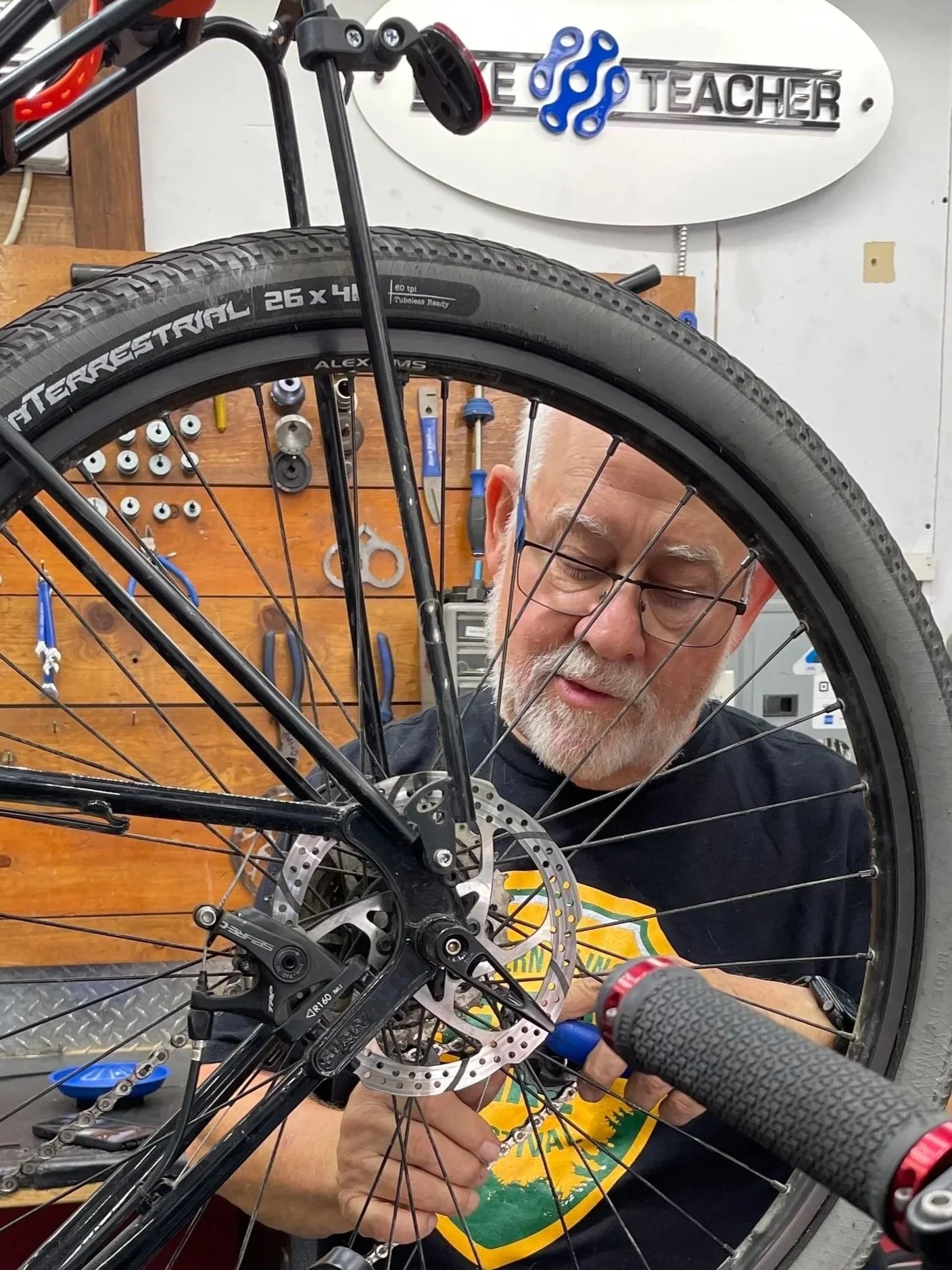
Hands-on bicycle mechanic training allows you to work through those situations with an instructor present. You can ask questions, correct mistakes and understand why a particular repair method works.
At Bike Teacher, students work directly on bicycles and components in a practical shop environment. Classes are private or limited to very small groups, allowing the instruction to be adjusted to each student’s experience and goals.
Students are also welcome to bring their own bicycles when appropriate. Working on a familiar bike can make the training immediately useful.
Choose Training That Matches Your Goal
Not everyone needs the same amount of training.
A beginner may start with a four-hour class to learn essential maintenance and repair skills. Someone who wants broader mechanical ability may choose a longer course with more time for drivetrain, brake and component work.
Students interested in employment, starting a repair service, or developing professional-level skills generally benefit from a more comprehensive bicycle mechanic program. Bike Teacher offers several training lengths, including 4-hour, 12-hour, 40-hour and 70-hour options. Wheel-building instruction is also available.
Classes are customizable, so the training can focus on the skills most relevant to the student.
Build Confidence Through Repetition
Completing a class is an important beginning, but becoming a capable mechanic also requires repetition. Continue practicing inspections, adjustments and common repairs until you can perform them consistently.
When something does not work correctly, slow down and diagnose it. Troubleshooting is one of the most valuable skills a mechanic can develop.
Students completing Bike Teacher’s longer programs receive a certificate of completion. This documents the training completed, but it should not be confused with a government-issued bicycle mechanic license or certification.
Bicycle Mechanic Training in San Jose
Bike Teacher has provided hands-on bicycle mechanic instruction in San Jose since 2013. Training is available for complete beginners, experienced riders, aspiring professional mechanics and people interested in operating their own repair business.
Classes and bicycle repair services are available by appointment. Scheduling is flexible, and classes are offered throughout the year rather than only on fixed semester dates.
Ready to begin? Contact Bike Teacher to discuss your experience, goals and available class dates.
Suggested button:
Ask About Class Dates
Suggested photo:
Use a real photo of a student performing a hands-on repair—ideally adjusting a derailleur, working at a repair stand or using a torque wrench—with you visible providing instruction. Avoid a posed group photograph for this article.