Should You Learn to Repair Your Own Bike or Take It to a Bike Shop?
If you own a bicycle, you've probably asked yourself this question at some point:
Should I fix it myself, or should I take it to a bike shop?
The answer depends on the repair, your experience, and whether you're willing to learn. The good news is that many bicycle repairs are easier than people think. With the right instruction and a few quality tools, most riders can confidently perform routine maintenance and keep their bikes running smoothly.
Repairs Most Cyclists Can Learn
Many common repairs don't require years of experience. These are skills that almost anyone can learn with hands-on instruction:
Repairing a flat tire
Replacing tubes and tires
Cleaning and lubricating the drivetrain
Adjusting derailleurs for smooth shifting
Adjusting brakes
Installing new brake pads
Replacing chains
Performing routine safety inspections
Learning these skills not only saves money, but also gives you confidence every time you ride.
Repairs That May Require More Experience
Some jobs require specialized tools, careful measurements, or advanced knowledge. Examples include:
Wheel building
Suspension service
Hydraulic brake bleeding
Headset facing and frame preparation
Press-fit bottom bracket installation
Major frame damage assessment
Electronic drivetrain diagnostics
These repairs can certainly be learned, but they're usually best tackled after building a strong foundation in bicycle mechanics.
Why Learning Bicycle Repair Is Worth It
Every cyclist eventually encounters mechanical problems. Whether it's a flat tire miles from home or shifting that suddenly stops working, knowing how to diagnose the issue can make the difference between finishing your ride and calling for a pickup.
Learning bicycle repair also helps you:
Save money on routine maintenance.
Understand how your bike works.
Ride with greater confidence.
Spot problems before they become expensive repairs.
Make better decisions when buying replacement parts.
Many of my students tell me that after taking a class, they enjoy riding even more because they understand what their bike is doing and how to keep it performing at its best.
Why Hands-On Learning Matters
There are thousands of repair videos online, and they're a great resource. But videos can't tell you if your derailleur adjustment is just right or whether you're applying the correct torque to a bolt.
Hands-on instruction allows you to ask questions, receive immediate feedback, and practice techniques on real bicycles using professional tools. That's often the difference between simply watching a repair and truly learning how to perform it.
Bring Your Own Bike and Learn on It
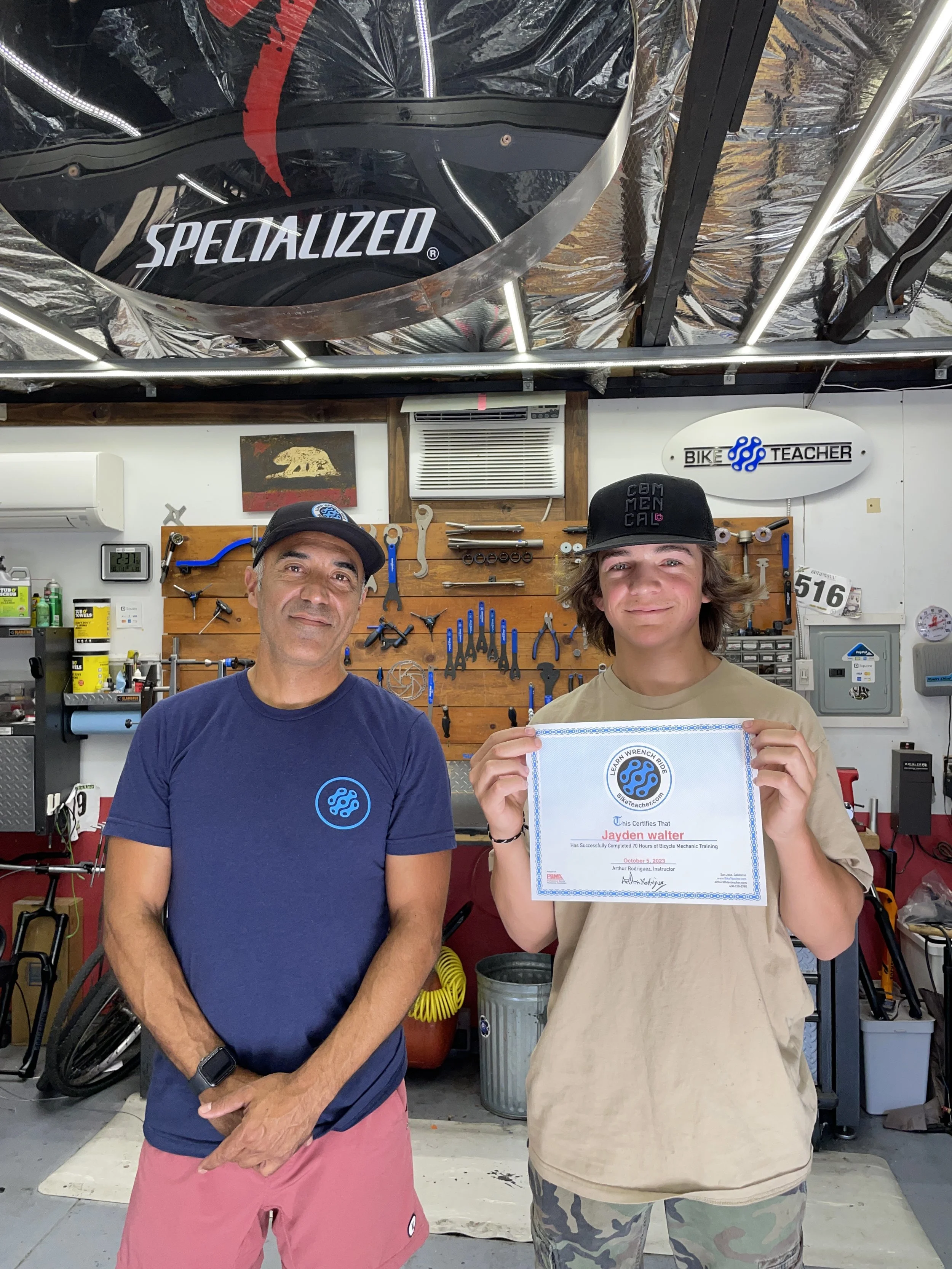
One of the advantages of training at Bike Teacher is that students are encouraged to bring their own bicycles to class. Instead of practicing on an unfamiliar bike, you'll learn while working on the bike you ride every week.
That means you'll leave class with new skills and a bike that's been properly inspected and adjusted.
Start Building Your Skills
Whether you're completely new to bicycle maintenance or want to develop professional mechanic skills, learning how to repair your own bike is an investment that pays dividends for years.
At Bike Teacher in San Jose, classes are intentionally kept small so every student receives plenty of individual instruction. From beginner maintenance to advanced mechanic training and wheel building, you'll gain practical experience that you can immediately apply to your own bicycle.
If you've ever wanted to understand how your bike really works, there's no better time to start. Learning bicycle repair isn't just about fixing bikes—it's about becoming a more knowledgeable, confident cyclist.