
How to Tell If Your Bicycle Chain Needs Replacing (Before It Ruins Your Cassette)
One of the most overlooked maintenance items on a bicycle is the chain. Many riders wait until their bike starts skipping gears or making noise before thinking about replacing it. Unfortunately, by that point, the chain may have already caused unnecessary wear to the cassette and chainrings.
The good news is that checking chain wear is quick, inexpensive, and can save you hundreds of dollars in replacement parts.
Does a Bicycle Chain Really Stretch?
Not exactly.
The side plates don’t actually stretch. Instead, the pins and rollers wear over thousands of miles. As these parts wear, the distance between the chain links gradually increases. This is commonly called “chain stretch,” even though it’s really wear.
As the worn chain meshes with the cassette and chainrings, it slowly wears those teeth to match the longer chain. If you wait too long, installing a new chain alone may cause poor shifting or skipping because the cassette has worn with the old chain.
How Do You Check Chain Wear?
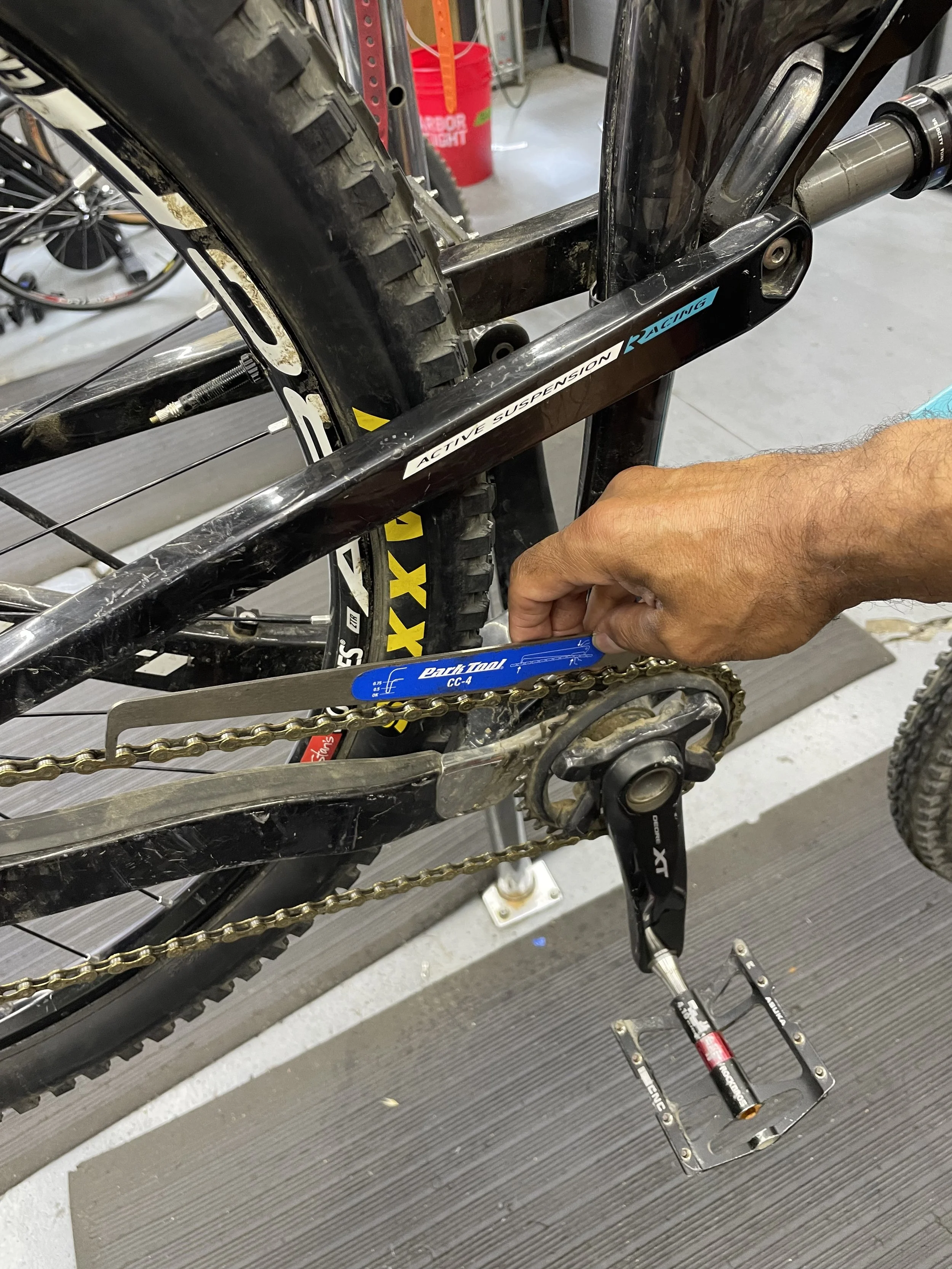
The easiest method is with a chain wear gauge, such as the Park Tool CC-4.
The gauge quickly tells you whether your chain is still within its service life or if it’s time to replace it. It only takes a few seconds and can prevent much more expensive repairs later.
When Should You Replace Your Chain?
There’s no single mileage that applies to every rider.
Chain life depends on several factors:
Riding conditions
Weather
Cleaning and lubrication
Rider power
Terrain
Chain quality
Checking your chain regularly is much more accurate than relying on mileage alone.
Why Early Replacement Saves Money
Replacing a chain at the proper time is one of the least expensive maintenance jobs you can do.
Ignoring chain wear can lead to replacing:
The cassette
Chainrings
Sometimes even derailleur pulleys
A simple chain replacement often costs far less than replacing an entire drivetrain.
Learn to Inspect Your Own Bike
One of the first skills students learn at Bike Teacher is how to inspect a bicycle for wear before replacing parts. Understanding chain wear, cassette wear, and drivetrain condition helps riders make informed decisions instead of guessing.
Whether you’re maintaining your own bike or want to build professional mechanic skills, learning proper inspection techniques can save money, improve shifting performance, and keep your bike riding like new.
If you’d like to learn these skills hands-on, Bike Teacher offers small-group bicycle mechanic training classes in San Jose for beginners through advanced students.
Click on image to view the Beginner Class.